




Strange Journey, Serious Craft
The Rocky Horror Show is back on Broadway, glitter and all, and ahead of the 2026 Tony Awards, the production is drawing attention not just for its fishnet-and-corset spectacle but for what’s happening in the dressing rooms before the curtain rises. Allure went backstage to document how the revival’s hair and makeup looks are built from scratch, night after night, for one of theater’s most visually demanding productions.
What the visit revealed is that cult iconography has a cost – measured in prep time, product, and the kind of technical precision that rarely gets acknowledged during curtain calls. The aesthetic of Rocky Horror is so embedded in popular imagination that replicating it on a Broadway stage, at scale, with live performance pressure, requires a team working at a level most audiences never consider.
Building the Look From the Ground Up
The production’s beauty department faces a specific challenge: Rocky Horror’s visual identity is already locked in the public mind through the 1975 film, the decades of midnight screenings, and the legions of fans who show up to productions in full costume. The stage version has to honor that iconography while making it legible from the back of a Broadway house – which means every brushstroke, every hairpiece, every drawn-on contour line carries more weight than it would in a studio or on a street-level set.
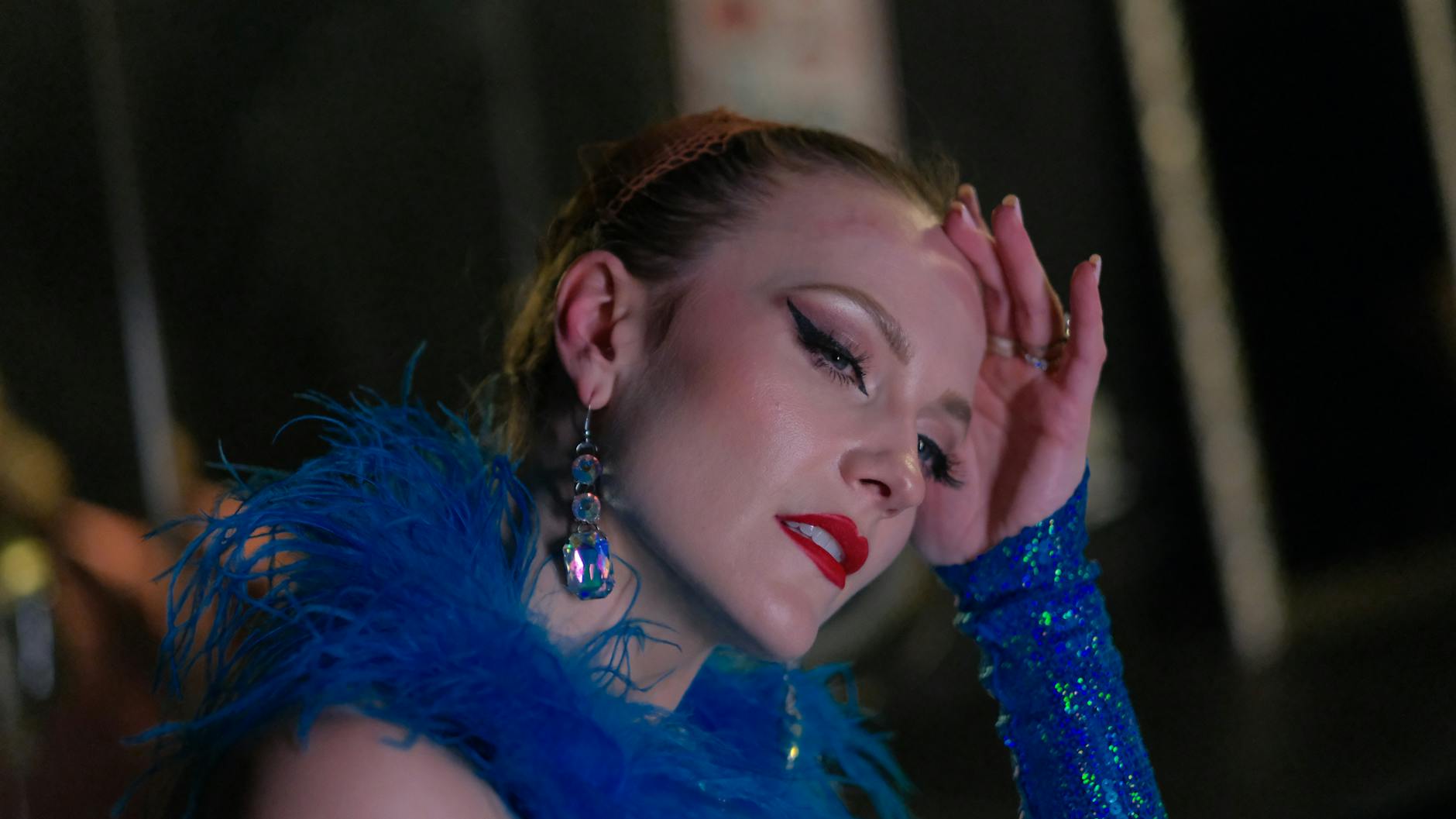
The hair and makeup work for this revival is built around theatricality at full volume. Heavy contouring, bold eye looks, structured wigs, and strategically placed glitter aren’t decorative choices – they’re functional ones. Stage lighting flattens features, and distance erodes detail, so the beauty department compensates by amplifying everything. What reads as excess from a few feet away becomes exactly right from the mezzanine.
The Mechanics Behind the Magic
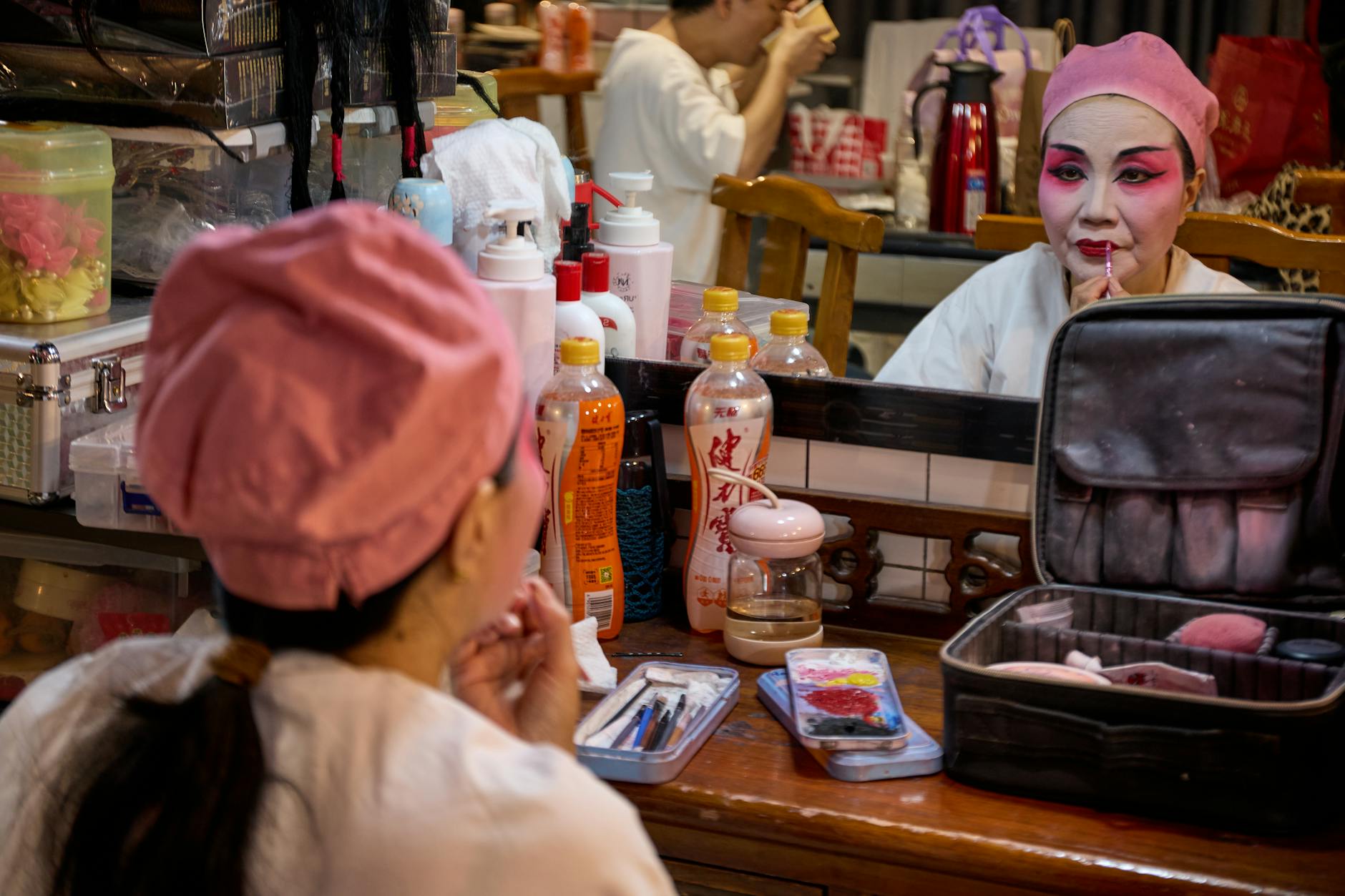
A Broadway revival doesn’t have the luxury of reshoots or editing. Every performance demands the same result, which means the backstage beauty process is standardized with military precision. Each performer has a documented look – specific products, specific application sequences, specific timing – so that the seventh show of the week matches the first.
The prep work alone is substantial. Wigs need to be set and pinned, foundations matched to stage lighting rather than natural light, and eye looks built in layers that will survive two-plus hours of movement, sweat, and theatrical intensity. For a show like Rocky Horror, which asks its cast to dance, sing, and inhabit characters whose physical appearance is part of the entire point, a makeup look that shifts or slides mid-performance isn’t an aesthetic problem – it’s a storytelling failure.
The glitter, in particular, demands careful handling. It reads beautifully under stage lights, catching color and throwing it back into the house in ways that matte products simply can’t. But it migrates. It transfers. It ends up where it wasn’t supposed to be, which means the beauty team has to build application techniques that contain it enough to stay intentional throughout the run of the show. There’s a reason experienced theatrical makeup artists treat glitter as a material requiring its own protocol.
The wig work runs parallel to all of this, with each hairpiece requiring its own maintenance regimen between performances. Rocky Horror’s aesthetic vocabulary pulls from 1970s glam rock, gothic excess, and science-fiction fantasy simultaneously, and the hair has to carry all three registers at once. That’s not a single silhouette – it’s a range of textures, colors, and constructions that have to read as cohesive from the audience while remaining individually distinct on each character.
What Theatrical Beauty Demands That Editorial Doesn’t
The backstage visit underlines something that gets lost in the broader beauty conversation: stage makeup is its own discipline. The skills that make someone excellent at editorial work, film work, or even red carpet prep don’t automatically transfer to theatrical applications. The lighting is different, the durability requirements are different, and the collaborative structure – working within a production’s established visual world rather than building one from scratch – requires a different kind of creative thinking.
For the Rocky Horror revival specifically, the beauty department is also working with a show that has five decades of audience expectation behind it. Fans who have seen the production before, or who have worn the looks themselves at midnight screenings, will notice when something is off. That’s a layer of scrutiny most Broadway productions don’t face in quite the same way.
Why This Revival Gets Noticed Before Tony Season
The timing of Allure’s backstage access – ahead of the 2026 Tony Awards – isn’t incidental. Awards season puts a spotlight on everything a production is doing well, and for Rocky Horror, the visual execution is part of the argument the show makes for itself. A production this dependent on its aesthetic has to deliver that aesthetic consistently, at the level of craft the industry recognizes when it hands out nominations.
Beauty departments in theater are rarely the first thing mentioned in reviews. They tend to get absorbed into broader descriptions of design, of atmosphere, of whether a production successfully conjures the world it’s trying to build. Rocky Horror’s revival is a case where the hair and makeup work is inseparable from whether the show lands at all – the aesthetic isn’t dressing applied to a story, it is the story’s surface, the first thing an audience encounters and the thing it carries out into the lobby afterward.
Which raises a question worth sitting with as Tony nominations approach: at what point does theatrical beauty work start being assessed on its own terms, with the same critical attention given to set design or costume, rather than folded into the general impression of a production’s visual world?