




The Character Came First, Then Came the Color
When production began on The Love Hypothesis, hair department head Frédéric Bélanger wasn’t thinking about trends. He was thinking about character – specifically, what Lili Reinhart’s hair needed to say before she ever opened her mouth on screen. The result was a color transformation that became as much a storytelling device as any line of dialogue in the film.
Bélanger has spoken openly about the layered process behind Reinhart’s look, describing the work as both an artistic and scientific undertaking – a balance between what reads on camera and what holds up under the physical demands of a film set. It’s a distinction that gets lost in most conversations about Hollywood hair, where the finished product tends to eclipse the methodology entirely.
What Frédéric Bélanger Actually Built
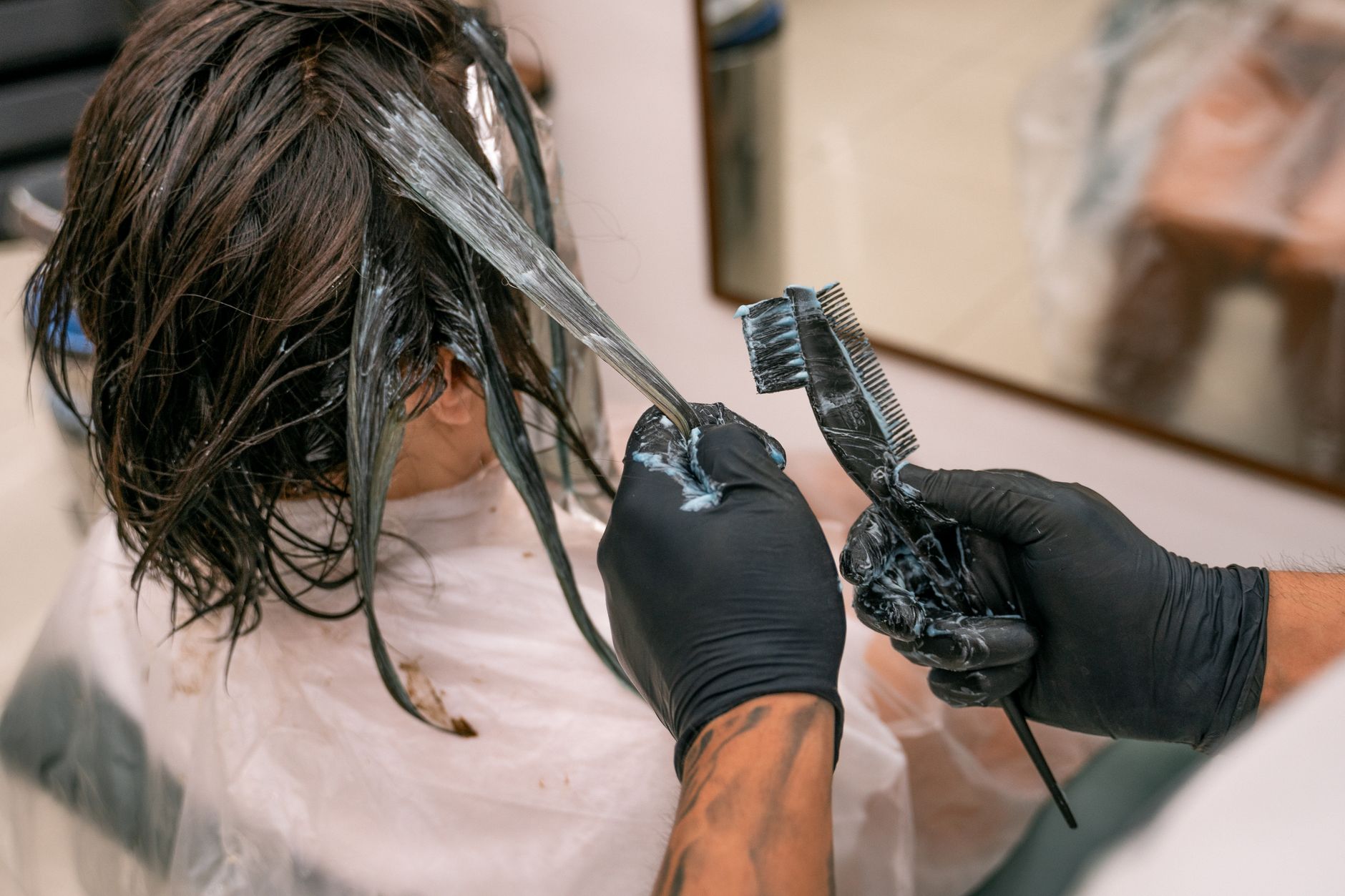
Hair transformations in film are rarely as spontaneous as red carpet moments make them appear. Bélanger’s approach to Reinhart’s color involved deliberate decisions at every stage – the kind of technical precision that accounts for lighting rigs, continuity across shooting days, and the way pigment behaves differently on camera versus in natural light. A shade that looks warm and dimensional on a phone screen can flatten entirely under certain studio conditions, which is why colorists working in film operate with a different set of constraints than those working in salons.
For Reinhart specifically, the transformation required attention to how her new color would track against the emotional arc of her character. Hair in film isn’t static – it ages, reacts, and shifts alongside the story. Bélanger’s work on The Love Hypothesis was designed with that trajectory in mind, making choices early in production that would pay off visually in later scenes. That kind of forward planning is what separates a hair department head from a stylist simply executing a look.
The beauty work across the film drew on a clear aesthetic logic, with each choice – color, texture, styling – connected to character rather than disconnected from it. Reinhart’s transformation sits at the center of that framework, functioning as a visual marker of where her character is and where she’s headed.
The Fanfiction Cameo That Never Made It to Screen
One of the more unexpected details to surface from behind-the-scenes conversations about the film is the fanfiction-inspired cameo that was considered but ultimately didn’t make it into the final cut.
The Love Hypothesis is adapted from Ali Hazelwood’s novel of the same name, which itself originated as a piece of fan fiction. That origin story gave the production a built-in community of readers who arrived with specific expectations and strong attachments to the source material. The near-inclusion of a fanfiction-inspired cameo suggests the production was, at some point, actively engaging with that history – whether as homage or as a knowing wink to the novel’s unconventional literary roots. That it didn’t survive to the final film leaves open questions about how far the creative team was willing to lean into the meta dimension of the project. The tension between honoring a fandom and making something that functions for a broader audience is never fully resolved, and in this case, the cameo became a casualty of that negotiation.
Why Film Hair Departments Work Differently Than Editorial
The distinction between editorial hair and film hair is worth pausing on. In editorial contexts – magazine shoots, ad campaigns, runway – a look exists for a single frame or a controlled sequence of images. Film demands something else: a look that must remain consistent across weeks of shooting that happen out of sequence, under variable conditions, on an actor who is physically and emotionally performing at the same time. Bélanger’s title as department head means he is responsible for the entire system that keeps that consistency intact, not just the creative vision at the outset.
That system involves detailed records, precise formulas, and a team executing the same result repeatedly under different circumstances. For a color transformation as specific as Reinhart’s in The Love Hypothesis, maintaining that consistency across the shooting schedule is its own technical achievement – one that rarely gets acknowledged when audiences respond to a performance or a story.
Reinhart’s hair in the film will likely register for most viewers as simply “her look” – a natural extension of the character rather than a constructed outcome of months of planning. That invisibility is, in a sense, the goal. When hair design is working at its best in film, it disappears into the story. The craft only becomes visible when something goes wrong, which is precisely why the attention Bélanger brought to the science of the transformation matters as much as the aesthetic choices driving it.
For anyone paying attention to how beauty functions as a narrative tool in contemporary film, The Love Hypothesis offers a specific case study – a project where the hair department’s decisions were integrated into the storytelling from the start, not added afterward as an aesthetic afterthought. Whether the finished film delivers on that ambition is a separate question from whether the groundwork, at least, was laid with intention.
The fanfiction cameo remains unfilmed. Somewhere in the production’s early drafts, it existed – close enough to be discussed, not close enough to survive.