




A Red Carpet Moment Worth Dissecting
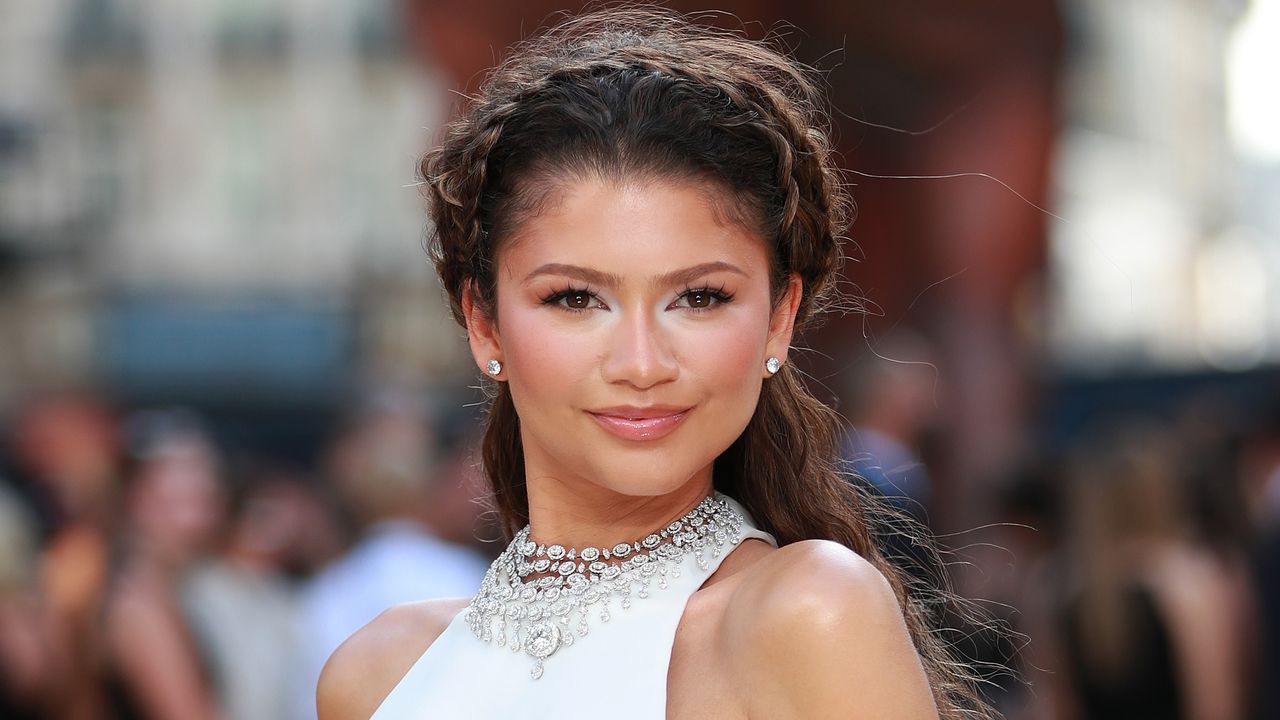
Zendaya showed up to the Odyssey premiere wearing waist-length wavy hair finished with a braid crown, and the beauty world has not stopped talking about it since.
The Hair That Stopped the Room
Waist-length hair at a major film premiere is a statement on its own. When that length is paired with soft, flowing waves and then anchored at the crown with a braided detail, the entire look shifts – less red carpet, more editorial mythology. Zendaya has always understood that her hair choices carry weight, and this appearance at the Odyssey premiere confirmed that she is not coasting on past moments.
The braid crown itself is the detail doing the most structural work here. Positioned at the top of the head and wrapping across the hairline, it functions like a headpiece without actually being one. It controls volume, adds architecture to what might otherwise read as simply “long hair down,” and gives the eyes somewhere specific to land before traveling down the rest of the look. That architectural quality is exactly why braid crowns have historically moved in and out of fashion – they carry an inherent formality, but styled loosely, they read as effortless.
The waves beneath the crown are equally intentional. They are not the tight spiral curls of a blowout gone wrong, nor the flat sheet of a press that reads too polished. Instead, the texture sits somewhere in between – defined enough to look styled, loose enough to feel organic. For hair that falls to the waist, maintaining that kind of consistent wave pattern from root to end requires real technical skill, whether achieved through a large-barrel iron, braiding damp hair overnight, or a combination of both.
What makes the full picture work is the contrast in tension. The braid crown is neat, precise, and controlled. The rest of the hair below it is free, movement-driven, and open. That push and pull between structure and ease is what separates a genuinely good hair moment from one that just photographs well. Zendaya’s team understood the assignment.
Why Braid Crowns Are Coming Back Now
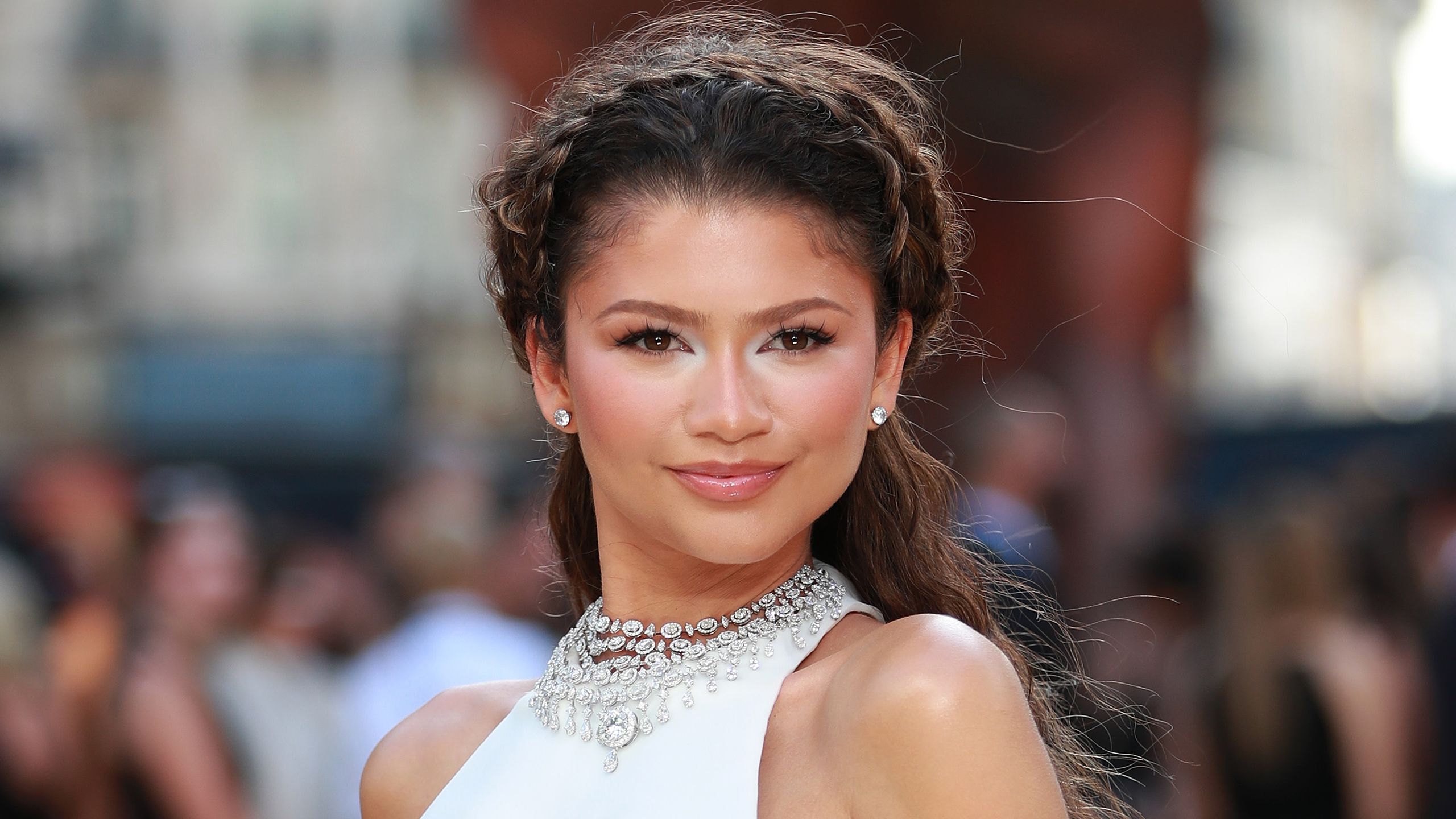
Braid crowns have been cycling through fashion history for long enough that calling any single appearance a “comeback” risks oversimplifying the trend’s arc. But Zendaya’s Odyssey premiere look marks a specific kind of reentry – one attached to a major cultural moment, on a figure with direct influence over what her generation considers worth trying. That combination is how a hairstyle moves from Pinterest archive to actual salon request.
The style peaked hard in the mid-2010s, appearing everywhere from bohemian weddings to music festivals, often executed in a way that leaned heavily into the flower-child reference. What has changed in the current iteration is the context and the execution. Zendaya’s version is not rustic or whimsical. It’s sleek at the crown and voluminous below, shot through with enough polish to read on a premiere red carpet without losing the softness that makes braid crowns feel approachable in the first place.
There is also a practical argument for why this style is gaining traction again. As lived-in texture and natural movement have replaced the hyper-styled aesthetics of earlier decades, braid crowns offer a way to add visual interest without relying on heat tools for the focal point of the look. The braid itself is built from the hair’s own structure. It doesn’t require product-heavy finishing or anything that photographs as stiff. For stylists working with clients who want something that looks considered but not overworked, it’s a useful tool.
Longer hair trends have also created more runway for the style to land properly. A braid crown on a short or medium-length cut requires extensions or creative sectioning to pull off convincingly. But as longer lengths continue to dominate editorial and red carpet appearances, the braid crown has a natural home again. The hair simply has enough body and weight to make the proportion work.
Color also plays a role in why this specific moment reads so strongly. Zendaya’s hair at the premiere carried depth and dimension that kept the waist-length waves from looking flat. A single-process color at that length can sometimes read monotone in photos, losing definition where waves overlap. The dimension in her hair – whether natural or enhanced – kept every section of that length visually distinct, which matters enormously when the goal is to show off movement and wave pattern across such a long canvas.
Stylists who have been fielding requests after red carpet moments know that the Zendaya effect is real and fast. The gap between a major appearance and the first client sitting down asking to recreate it has shortened dramatically. Braid crown variations – whether a full wraparound, a half-crown paired with loose hair below, or a double-braid iteration – are likely to show up in appointment books within weeks of this premiere landing in every beauty feed worth following.
What the Moment Actually Says About Beauty Right Now
Zendaya’s Odyssey premiere hair did not emerge in a vacuum. It fits neatly into a broader shift toward styles that reference historical femininity without staging them in a way that feels costume-like. Braid crowns have roots across dozens of cultures and centuries – from Eastern European folk traditions to ancient Greek imagery – and the current revival is landing without the heavy-handed thematic framing that sometimes made mid-2010s versions feel like costume rather than style. The look reads as contemporary precisely because it is not trying to explain itself.
What remains to be seen is whether the mainstream response to this moment pushes braid crowns back into overexposure territory – the same cycle that made them feel tired by 2018 – or whether the current styling approach keeps them elevated long enough to settle into something more permanent. At the Odyssey premiere, at waist length, with those waves carrying below the crown all the way down, the style had enough going on that it didn’t need a trend story to justify it. It just looked like something worth copying.