





When the Costume Does More Work Than the Script
Christopher Nolan has never been accused of being a director who disappears into his female characters. Across his filmography – the one that includes genuinely great work, the kind that earns real admiration – there is a recurring pattern: women rendered as architectural elements rather than living, breathing points of view. His new film, The Odyssey, arrives with the full weight of one of Western literature’s most enduring stories behind it, and yet the women at its center face the same creative ceiling his female characters have always hit.
The mythology handed Nolan four extraordinary women. He gave audiences four beautiful surfaces.
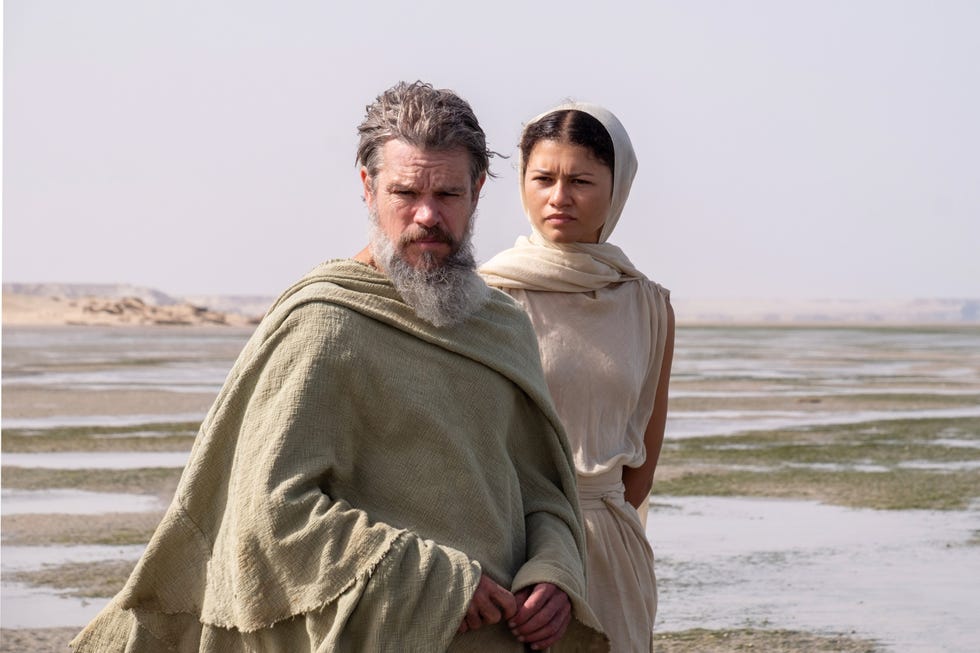
Penelope, Circe, Calypso, and Athena – each a figure of staggering complexity in Homer’s original – move through The Odyssey with presence but without depth. They are dressed, lit, and framed with Nolan’s characteristic precision. What they are not, apparently, is written with the same interior richness that the film’s male characters receive. For a story in which women are not minor players but co-architects of every major event, that gap is not a stylistic quirk. It’s a structural failure.

The Women Homer Actually Wrote
It’s worth pausing on what Nolan inherited before examining what he did with it. Penelope, in the original text, is not a passive figure waiting in soft focus for her husband to return. She is a strategist – the woman who undoes her weaving each night for three years to delay remarriage, who navigates a household overrun by over a hundred suitors while protecting her son, her household, and her own political survival. She deceives, maneuvers, and outlasts everyone around her. She is, by any modern reading, one of literature’s earliest portraits of a woman operating under conditions of extreme constraint with extraordinary intelligence.
Circe and Calypso, meanwhile, are not simply temptresses dropped into Odysseus’s path to complicate his journey home. Circe is a pharmacologist and a witch, a figure of genuine autonomous power who chooses to help Odysseus only after he meets her on equal terms. Calypso is a goddess who keeps Odysseus for seven years – not out of cruelty, but out of something the text treats as genuine feeling – and who ultimately releases him at divine order, mourning the loss openly. Her grief is given weight. Her sovereignty is treated as real.
Athena, of course, is the spine of the entire narrative. Without her intervention, Odysseus does not survive. Without her guidance, Telemachus does not grow into someone capable of standing beside his father. She is not a supporting character in Homer’s telling. She is the organizing intelligence of the whole poem. The fact that four distinct, fully-realized female archetypes exist in this source material – and that a filmmaker with Nolan’s technical mastery and evident ambition still struggles to translate their inner lives to screen – is the part of this conversation that keeps circling back.

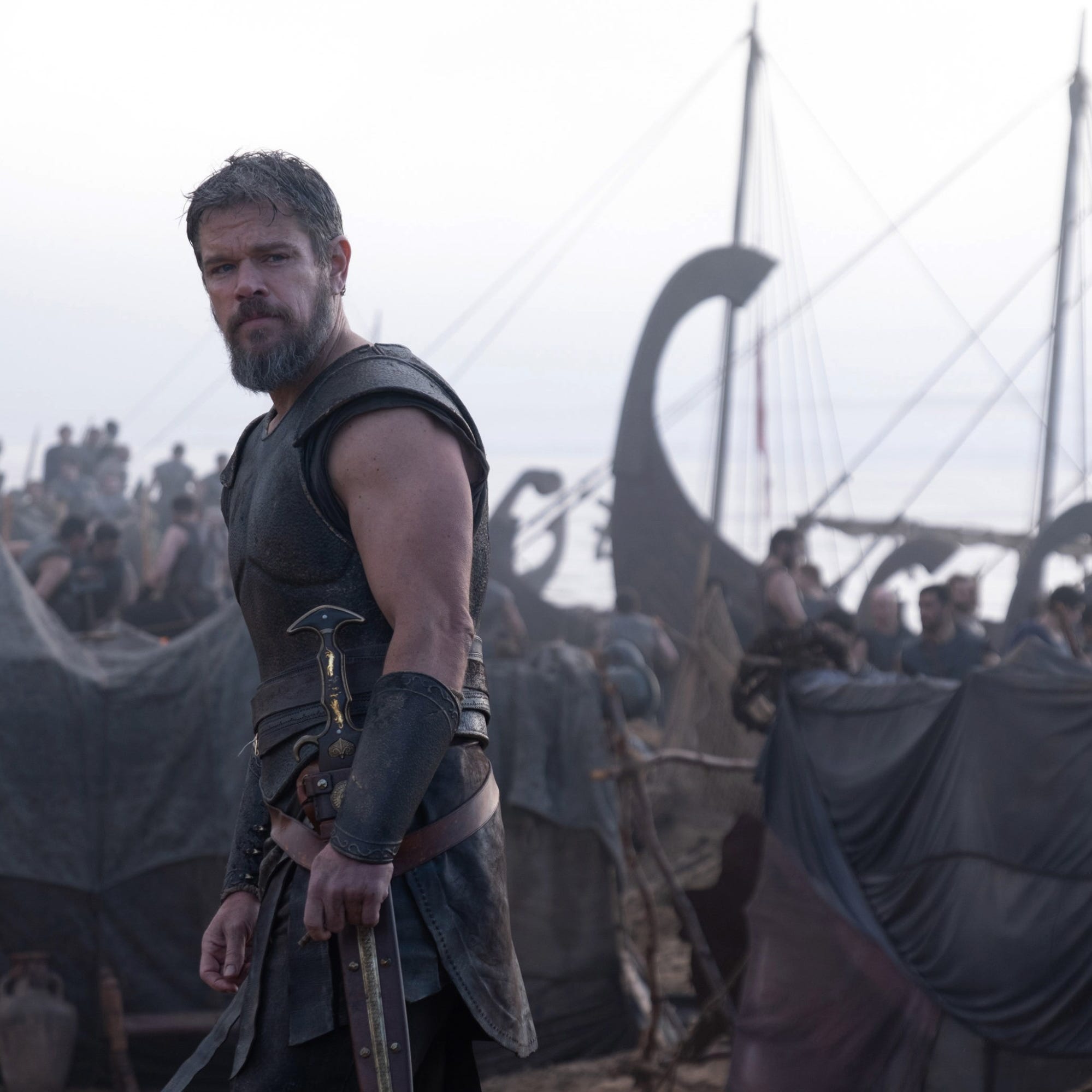
A Director’s Known Limitation, Now On an Epic Scale
Nolan’s relationship with female characters has been a consistent talking point among critics who otherwise champion his work. This is not a dismissal of his films – several of them are among the most formally inventive work produced in mainstream cinema over the past two decades. But even his admirers acknowledge the pattern: women in Nolan films tend to function as emotional catalysts for male characters rather than as protagonists of their own psychological experience. Marion Cotillard in The Dark Knight Rises, Cillian Murphy’s female counterparts in Oppenheimer, even the memory of Mal in Inception – these are characters defined almost entirely by what they mean to the men around them rather than by what they want, fear, or think on their own terms.
The Odyssey amplifies this tendency because the source material makes the contrast so visible. When the male characters – Odysseus, Telemachus, even the suitors – are granted psychological legibility and Penelope is not, the imbalance registers immediately. Audiences who know the poem feel it as a kind of subtraction. Audiences who don’t know the poem are simply handed a less interesting film than they could have had.
There is something almost counterintuitive about the result. Nolan is a director who clearly admires intellectual complexity, who builds films around layered structures and demands active engagement from his audience. The women of The Odyssey – particularly Penelope and Athena – are among the most intellectually complex figures in ancient literature. The alignment between his interests and his source material should have been close to perfect. That it apparently wasn’t raises a genuine question about where the disconnect lives: in the writing, in the casting choices, in the editing room, or somewhere earlier in how the project was conceived.


What Fashion Has Always Known About Penelope
There is a reason Penelope’s weaving and unweaving has resonated for centuries beyond the literary world – including, quietly, in fashion’s own conversation about craft, labor, and the visibility of women’s work. The women who have permanently reshaped American fashion share something with Homer’s Penelope: they operated in spaces where their intelligence was either unacknowledged or actively dismissed, and they built lasting things anyway. The loom as a site of both creative power and strategic delay is not a symbol that needs explaining to anyone who has worked in a field where women’s contributions get credited last, or not at all.
Circe, Calypso, Athena, and Penelope are not four versions of the same idea. They represent four entirely distinct relationships to power, desire, grief, and intelligence. Any adaptation that flattens them into a single register – the ornamental, the atmospheric, the decorative – is not just doing those characters a disservice. It is making a smaller film than the material demands.
Nolan’s The Odyssey is, by all accounts, a visually formidable production. The men are complex. The women are photographed beautifully. Whether that is enough – for audiences, for critics, for the long argument about whose inner life gets treated as worth dramatizing – is the question the film leaves open, not by design, but by omission. Penelope spent twenty years being more interesting than anyone around her gave her credit for. She would recognize the problem immediately.