




The Illusion Starts on the Hanger
There is a particular kind of buyer’s remorse that arrives not at checkout, but on the third wearing. The sweater felt genuinely soft when you pulled it from the rack – light, airy, the kind of find that makes you feel like you’ve cracked the code on luxury without the price tag. Then reality sets in: the silhouette droops by afternoon, the cuffs lose their shape, and a thick fuzz of pilling settles under the arms like it was always meant to be there. By week two, the whole thing reads less “effortless knitwear” and more “donation pile.”
The question that follows is obvious and worth asking seriously: what exactly sits between a $29 high-street cashmere knit and a $295-plus investment piece? Brand markup alone doesn’t account for the full gap. To find out where the difference actually lives, a visit to Northern Italy with luxury knitwear house Falconeri – tracing a single garment from raw fiber to finished product across their yarn mills in Biella and their facility and headquarters in Avio – reveals that quality cashmere is not the result of one superior ingredient. It’s built through a sequence of decisions, most of them invisible to the buyer.

It Begins Before the First Thread Is Spun
Walking into the factory floor in Biella, the first thing that registers is the sheer physical volume of the raw material. Massive pallets of fluffy Mongolian goat hair arrive directly from the pastures, unprocessed and stacked high. Picking up a handful of raw undercoat before any industrial treatment has touched it is a genuinely strange experience – extraordinarily soft, almost weightless, and so delicate that the word “fragile” doesn’t feel overstated. The closest comparison is holding cotton candy without the sugar coating.
This is where the budget and premium paths diverge, and it happens before a single machine gets involved. Lower-cost brands build their sweaters from short, thick leftover fibers – often the sweepings or coarse outer hairs that remain after the premium material has been sorted out. These fibers are cheaper to source precisely because they’re less desirable: they don’t hold structure as well, they pill faster, and they lack the fineness that gives high-quality cashmere its distinctive drape. The raw Mongolian goat undercoat selected for premium production is the opposite – long, fine, consistent fibers that take more time and cost more to procure, but behave entirely differently once they’re knit into a garment. Length matters because longer fibers interlock more securely during spinning, which means the yarn resists the friction that causes pilling. Short fibers, by contrast, work themselves loose with wear, forming the fuzzy surface that betrays a cheap knit within the first few outings.
What Happens Inside the Mill Determines Everything Else
Once the raw fiber arrives at the mill in Biella, the processing stages compound on each other in ways that either build quality or erode it, depending on the choices made at each point. Sorting, washing, combing, and spinning are all steps where a manufacturer can save time and money – or not. Premium production doesn’t rush any of them.
The combing stage alone separates finished product quality more than most buyers realize. It’s during combing that short fibers are removed from the long ones, refining the batch and producing what the industry calls “combed” or “worsted” cashmere. Brands working at lower price points often skip thorough combing or use fiber that hasn’t been sufficiently processed, which is why the pilling begins almost immediately after purchase – those short, loose fibers are already waiting to migrate to the surface.
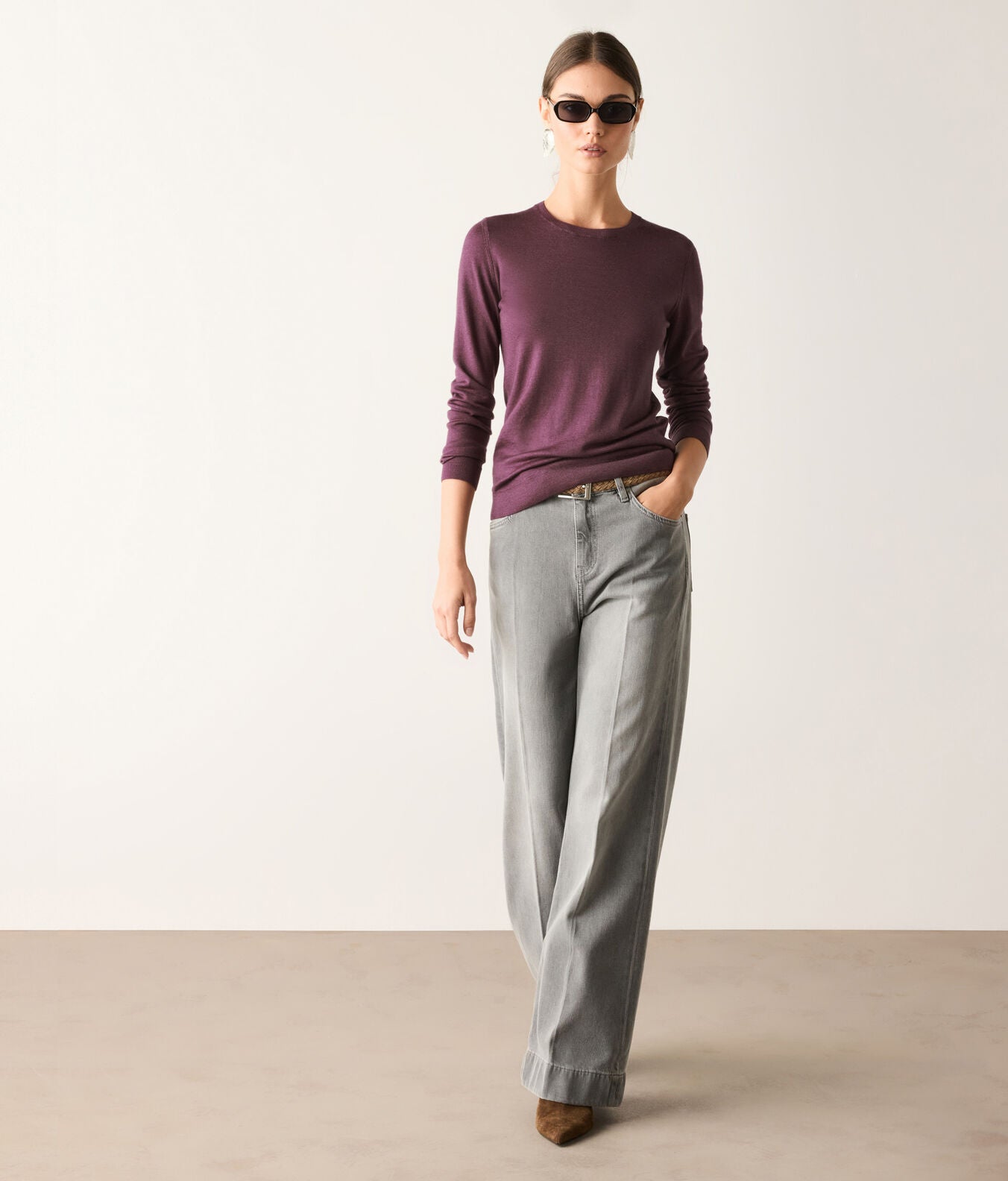
Spinning tension and yarn ply – how many threads are twisted together to form the final yarn – also determine how a finished garment holds its shape over time. A tightly spun, two-ply yarn behaves differently under stress than a loosely spun single-ply construction. It stretches less under its own weight, recovers more reliably after washing, and maintains the garment’s original silhouette through repeated wear. This is the kind of structural decision that never appears on a hangtag but shows up clearly after six months of use.
At Falconeri’s Avio facility, the production process continues through knitting, linking, and finishing – each stage governed by standards that extend the garment’s functional life rather than simply completing it. Finishing, in particular, affects hand feel and durability simultaneously. A properly finished cashmere piece has been washed, dried, and treated in ways that lock the fibers without stripping them, which preserves softness while reducing the likelihood of future distortion. Shortcuts at this stage are common among lower-price producers and tend to produce the “feels great in the store, disappoints at home” experience that defines cheap cashmere.
How to Read a Sweater Before You Buy It
Understanding the production gap makes it easier to evaluate a piece before committing to it. A few physical checks at the point of purchase can save a significant amount of regret. Hold the sweater up to light and look at the knit structure – premium cashmere has a consistent, even weave with no gaps or irregular density. Pull lightly at the fabric; a well-constructed knit recovers quickly, while a lower-quality one may show stress marks or take longer to return to shape.
Check the weight relative to the warmth. Genuine long-fiber cashmere is remarkably light for how insulating it feels. A sweater that feels dense and heavy is often working harder than it should because the fiber quality isn’t doing the job efficiently. Look at the seams and cuffs – these are the areas where construction shortcuts show up first. Flat-linked seams lie flush against the garment; cheaper alternatives are bulkier and tend to irritate the skin.
Caring for the Investment Once You’ve Made It
Even the best cashmere degrades without proper maintenance. Hand washing in cool water with a gentle detergent remains the most reliable method for preserving fiber integrity. Machine washing, even on delicate cycles, introduces friction and heat that accelerates pilling and stretching – particularly along the underarms and cuffs where the fabric already faces the most stress during wear. Laying a wet cashmere garment flat to dry rather than hanging it prevents the weight of the water from pulling the knit out of shape.
Storage matters more than most people account for. Folding cashmere – never hanging it – prevents the shoulder distortion that comes from weight pulling on the knit over time. Cedar blocks or lavender sachets discourage moths without the chemical residue that mothballs leave behind. And pilling, when it does appear even on premium pieces, is best addressed with a fabric comb or cashmere stone rather than a shaver, which can damage the underlying structure if used too aggressively.
The math on a $295 sweater versus a $29 one only looks unfavorable at the moment of purchase. A well-constructed cashmere piece, cared for correctly, holds its shape and softness for years – meaning the cost-per-wear calculation flips dramatically over time. The $29 alternative, realistically, rarely survives a single season looking the way it did on the hanger. Which raises the question that every serious wardrobe decision eventually circles back to: are you buying a sweater, or are you buying the six months until you need to buy another one?