







Ancient Worlds, Modern Hands
Christopher Nolan’s film adaptation of The Odyssey required its hair and makeup department to solve problems that no studio manual had ever addressed. How do you dress hair for a world that existed thousands of years before conditioner, without making actors look like they wandered off a Halloween set? The leads behind the film’s beauty work have started sharing answers, and the materials list alone is worth examining.
Sand mixed with hair gel. Sisterlocks crafted in Kenya. Gallons of argan oil moving through a production at scale. These weren’t incidental choices – they were the backbone of a visual language built to make antiquity feel inhabited rather than reconstructed.


When the Formula Is Grit, Not Gloss
The decision to combine sand directly into hair gel speaks to an approach that prioritized texture over artifice. Clean, bouncy hair reads as modern regardless of costume. Hair that carries the physical residue of an environment – salt, dust, the particulate matter of actual travel – pulls a viewer into a different relationship with a character’s body. Odysseus and his crew were not clean people. The makeup and hair leads understood that the beauty work had to carry that story on its own, frame by frame.
Working with sand as a styling agent is not a soft material choice. It is abrasive, unpredictable across different humidity conditions on set, and genuinely difficult to remove at the end of a shooting day without damaging the hair beneath. That the team committed to it as a recurring technique rather than a one-scene effect indicates how seriously the production took the idea that discomfort in the beauty department could produce authenticity on screen.
Argan oil entered the equation on the opposite end of the spectrum. Where sand introduced roughness and age, argan oil served as the conditioning counterweight – protecting actors’ actual hair health through weeks or months of shooting while the styling layered deliberate damage on top. Running gallons of it through a production is a significant budget and logistics commitment, and it reflects how the department balanced aesthetic ambition against the practical responsibility of returning performers’ hair to them intact.
The Sisterlocks Decision and Its Geography
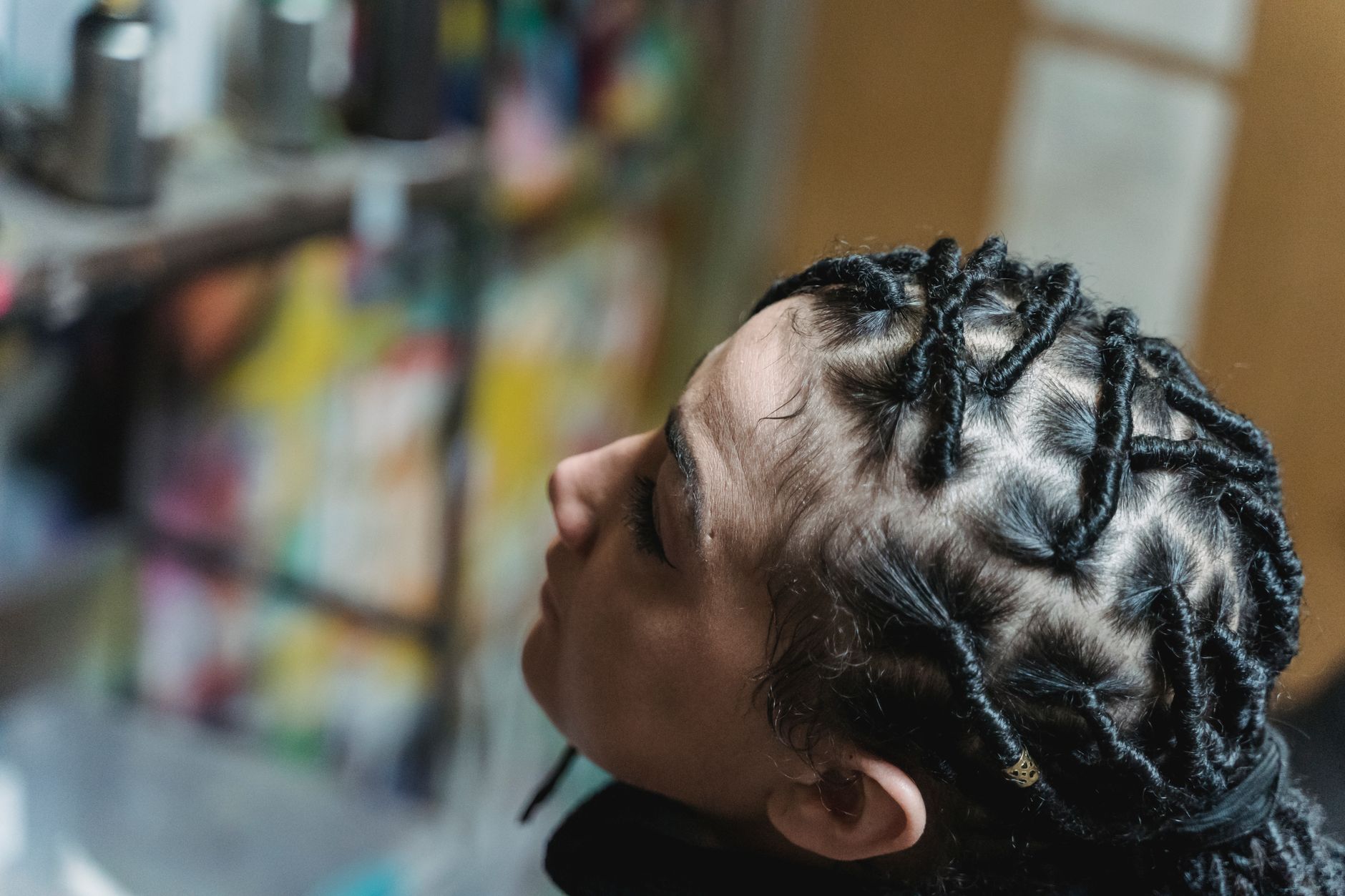
The choice to source sisterlocks from Kenya adds a dimension to the production’s beauty work that goes beyond technique. Sisterlocks are a specific, trademarked locking system developed by Dr. JoAnne Cornwell in 1993, distinguished from traditional locs by their smaller diameter and the specialized tool used in installation. Sending that work to Kenya rather than handling it on a standard studio lot signals either a commitment to specific artisans, an authenticity of cultural context, or both. The hair and makeup leads have not fully unpacked the reasoning publicly, but the geographic specificity is not a throwaway detail.
For a film set in a mythological Mediterranean world that drew from oral traditions spanning multiple continents and cultures, the decision to ground certain beauty work in African craft traditions carries visual and political weight. It also reflects a growing practice in major productions of distributing skilled beauty labor internationally rather than centralizing everything in Los Angeles or London.

The Invisible Architecture of Epic Beauty
Big-budget films often let their visual effects carry the spectacle while treating hair and makeup as a maintenance function – keep the actor camera-ready, match the continuity sheets, move on. What the Odyssey team describes is something structurally different: beauty work as world-building, where every product decision is also a narrative decision.
That framework puts unusual pressure on department heads. They are not simply executing a look approved by a director in a pre-production meeting. They are making hundreds of micro-decisions daily – how much sand goes into this character’s hair on day 47 versus day 12 of the story’s internal timeline, whether argan oil visibly changes the read of a texture under a particular lighting setup, how sisterlocks behave across different climates when the production moves locations. The continuity demands alone are a logistical exercise that most audiences never register.
Nolan’s filmmaking has always operated on the premise that the physical details audiences can’t consciously identify are exactly the ones that make a film feel real. His production designers, cinematographers, and costume teams operate under that same logic. The beauty department on The Odyssey appears to have internalized it fully – choosing materials for what they do to skin and hair under stress rather than for what they suggest from a distance.
There is also a durability question embedded in these choices. Sand in hair gel can migrate. It can fall onto costumes, irritate eyes, and behave differently on actor number three than it did on actor number one. Argan oil, used in volume, has a scent and a weight that accumulates. Sisterlocks require maintenance between shooting days. None of these are problems that a simpler approach would generate. The team accepted the complexity because the alternative – hair that looked dressed rather than lived-in – would have undermined everything the production was building visually.
What Gets Left Behind
Beauty work on a film like this disappears into the final product in a way that architecture or score do not. A viewer watching The Odyssey will not think: someone mixed sand into that hair gel, someone flew to Kenya for those locks, someone moved gallons of argan oil across a production to protect hair that was being deliberately aged every morning. They will simply feel, or not feel, that the world is real.
That invisibility is the actual goal. The question the hair and makeup leads are sitting with now, as the film moves toward audiences, is whether the sum of all those granular, expensive, physically demanding choices will register as a sensation rather than a technique – whether viewers feel the grit of the Aegean without ever knowing what was mixed into the jar.