





Star and Crowd, No Separation
Dua Lipa didn’t watch her Sunny Hill Festival from backstage or a cordoned-off VIP section. She was in the crowd – moving through it, photographed within it – which made what she wore carry a different kind of weight than a red carpet look ever could. Festival dressing at that level is a specific negotiation: visible enough to read as intentional, relaxed enough to survive a mosh pit.
She pulled it off across two distinct outfits, each drawn from labels with strong aesthetic identities, and neither one looked like a sponsorship obligation. The choices were Rabanne and Chloé – houses that sit at opposite ends of the texture spectrum – and Lipa wore both with the kind of ease that tends to get misread as effortlessness when it’s actually just confidence.

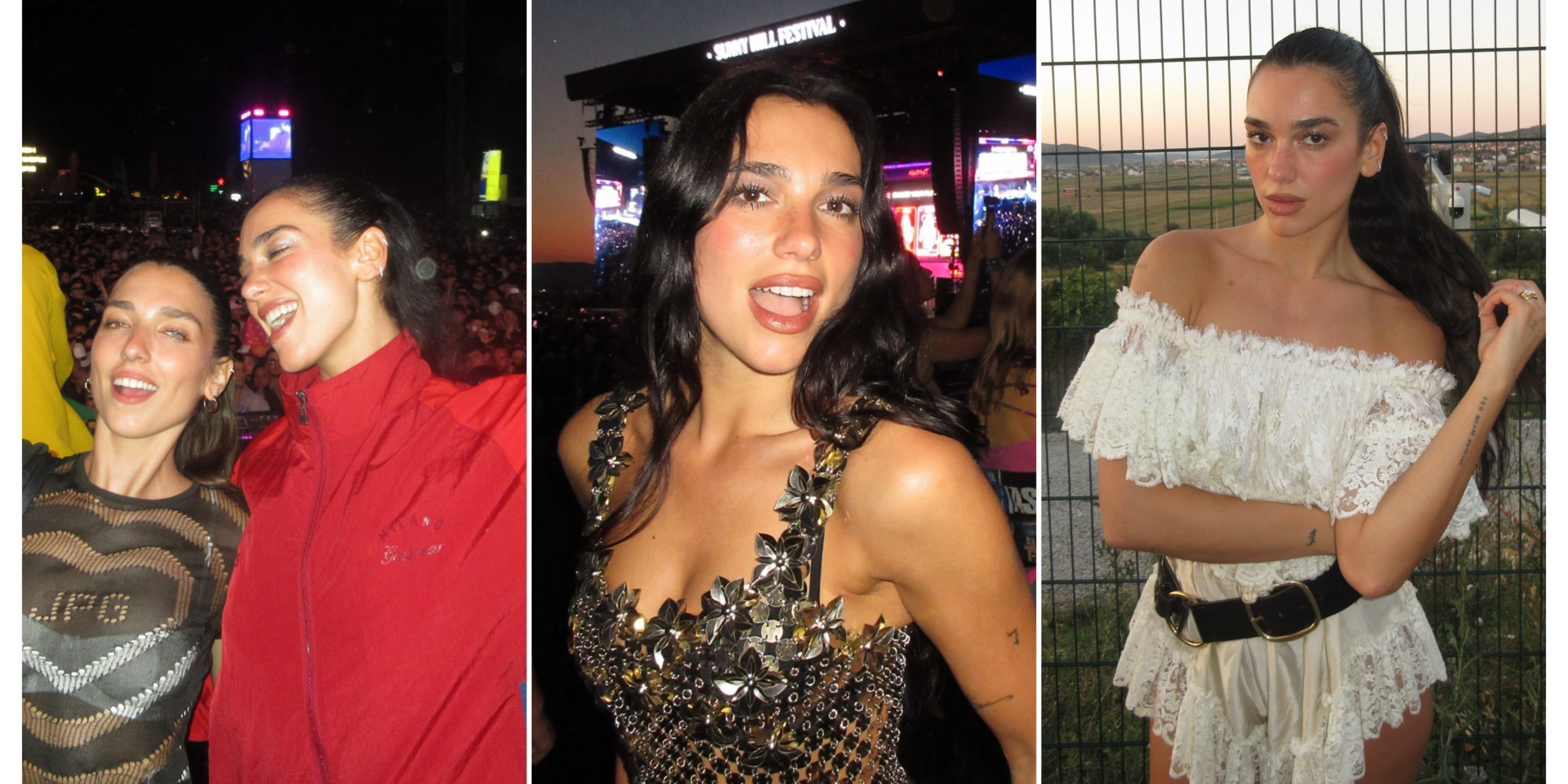
The Rabanne Chainmail Moment
The first look centered on a Rabanne chainmail minidress. Rabanne’s metal mesh is one of the house’s oldest signatures – Paco Rabanne introduced the concept in the 1960s, and it has never fully left the collections since. The current iteration under creative direction has kept the hardware-forward aesthetic while softening silhouettes, and the minidress Lipa wore reflects that balance: structured material, short hem, the kind of piece that photographs like armor but moves like fabric.
Wearing chainmail at a festival she founded is not a neutral wardrobe decision. Sunny Hill Festival is Lipa’s own project – she launched it as a celebration tied to her Kosovo heritage, bringing the event to Pristina. Showing up in the audience rather than staying backstage, dressed in something that visually announces itself without requiring a stage, says something about how she understands her own event. She’s not hosting it from above; she’s participating in it.
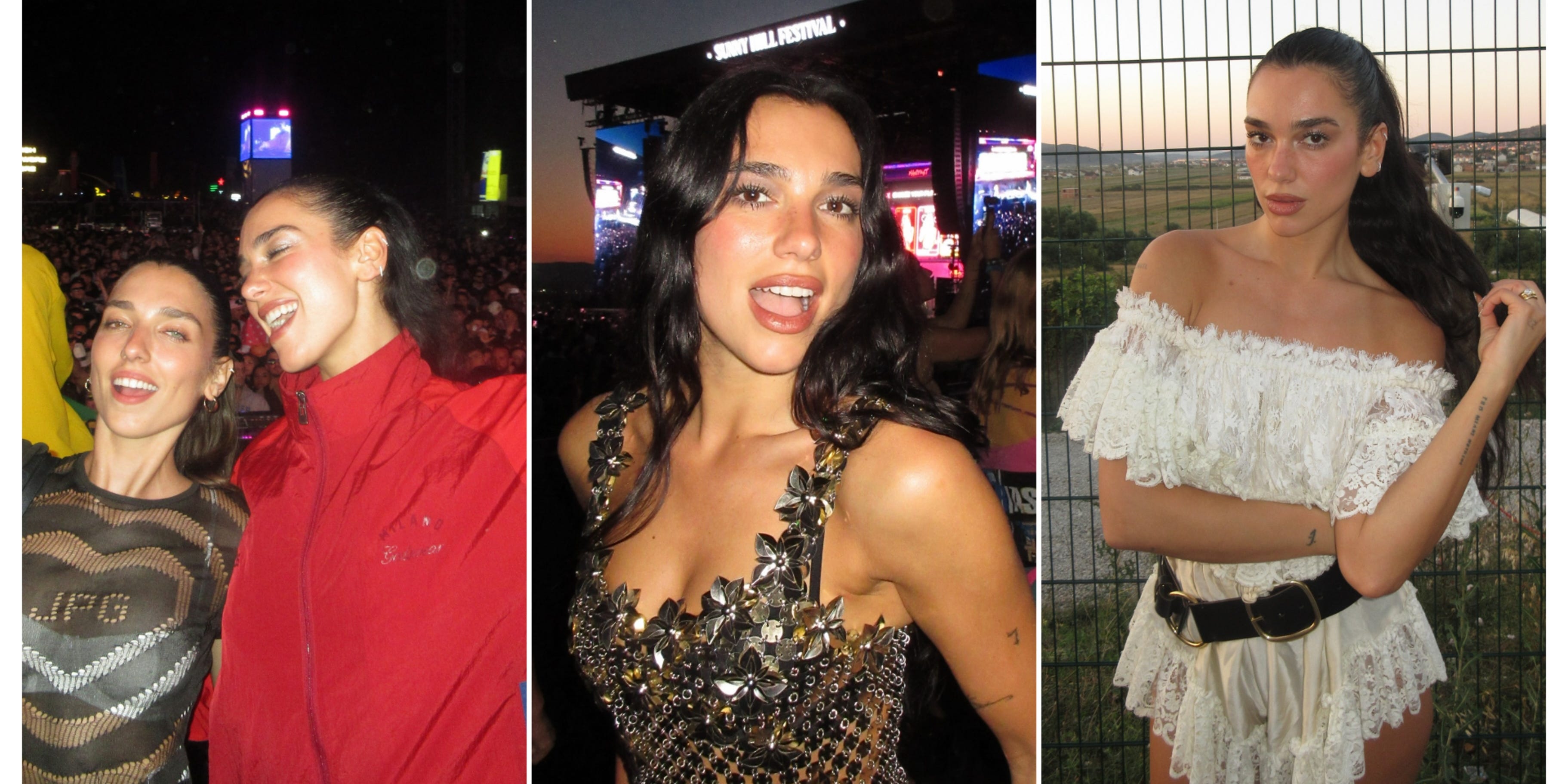
Chloé’s Lacy Playsuit as the Second Act
The second look shifted the register entirely. A Chloé lacy playsuit replaced the Rabanne metal – same festival, different mood. Chloé under Chemena Kamali has leaned hard into a bohemian femininity that feels less retro-costume and more like it was always there, waiting to be excavated. Lace and soft tailoring have anchored multiple recent collections, and the playsuit Lipa chose fits cleanly within that direction.
The lacy playsuit is a harder sell than the chainmail in some ways. Chainmail signals drama immediately; it doesn’t need context. A lace playsuit can read as underwhelming in photographs if it’s not worn with conviction, and at a festival, where the visual competition is everything happening around you, that risk is real. Lipa wore it without appearing to manage any of that.
What connects both looks is proportion – the minidress and the playsuit both keep the silhouette close and the hem short, which is a consistent thread in how Lipa has dressed publicly over the past few years. She doesn’t layer extensively or reach for volume. The styling logic is tight, whether the material is metal or lace.
Chloé and Rabanne rarely appear in the same conversation because they attract different instincts in a buyer or a stylist. One house is built around softness and tactile femininity; the other around precision and material experimentation. That Lipa wore both across a single festival day – not as a contrast exercise but as two equally natural expressions – is the more interesting detail buried inside what reads on the surface as a celebrity street-style story.

Sunny Hill as Context, Not Backdrop
Sunny Hill Festival matters here because it’s not a festival Lipa attends – it’s one she built. The event is rooted in Pristina, Kosovo, and Lipa has described it publicly as a way of giving back to and celebrating her heritage. That specificity changes the stakes of showing up in the crowd rather than keeping a performer’s distance from it. Being photographed among attendees at your own event is either a PR calculation or a genuine choice, and either way, the outfit has to hold up to that proximity.
Both looks did. The Rabanne chainmail minidress and the Chloé lacy playsuit are pieces that work at human scale – in a crowd, in motion, under natural light – rather than pieces engineered for distance and a lens with a long focal length.
What Festival Dressing Actually Requires
Festival fashion as a category gets flattened into a set of recurring tropes: fringe, boots, denim cutoffs, flower crowns that have been culturally retired several times and keep returning anyway. What Lipa demonstrated at Sunny Hill is a different approach – one that borrows nothing from the festival-specific wardrobe and instead brings clothes that happen to work in that environment because they’re well-chosen, not because they were selected for it.
The Rabanne chainmail minidress retails in a price bracket that puts it outside most festival budgets, and the Chloé playsuit isn’t far behind. That’s not the point. The point is the logic: picking pieces with strong individual identities, from houses with coherent aesthetics, and wearing them in an environment where the temptation to dress down or dress “appropriately” would be obvious. Lipa didn’t dress for the festival. She dressed, and happened to be at one.
Sunny Hill Festival drew crowds to Pristina, and Lipa was photographed in both looks across the event’s run. The chainmail came first – heavier, more declarative. The Chloé lace followed. Whether that sequencing was planned or incidental, the effect was a two-act festival wardrobe that managed to make metal and lace feel like they belong to the same person, the same day, the same crowd. The question that lingers is whether either house will list Lipa’s appearance in their next press materials – because both should.