



When the Costume Is the Commentary
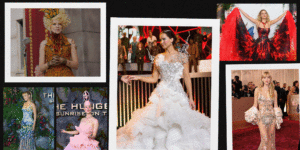
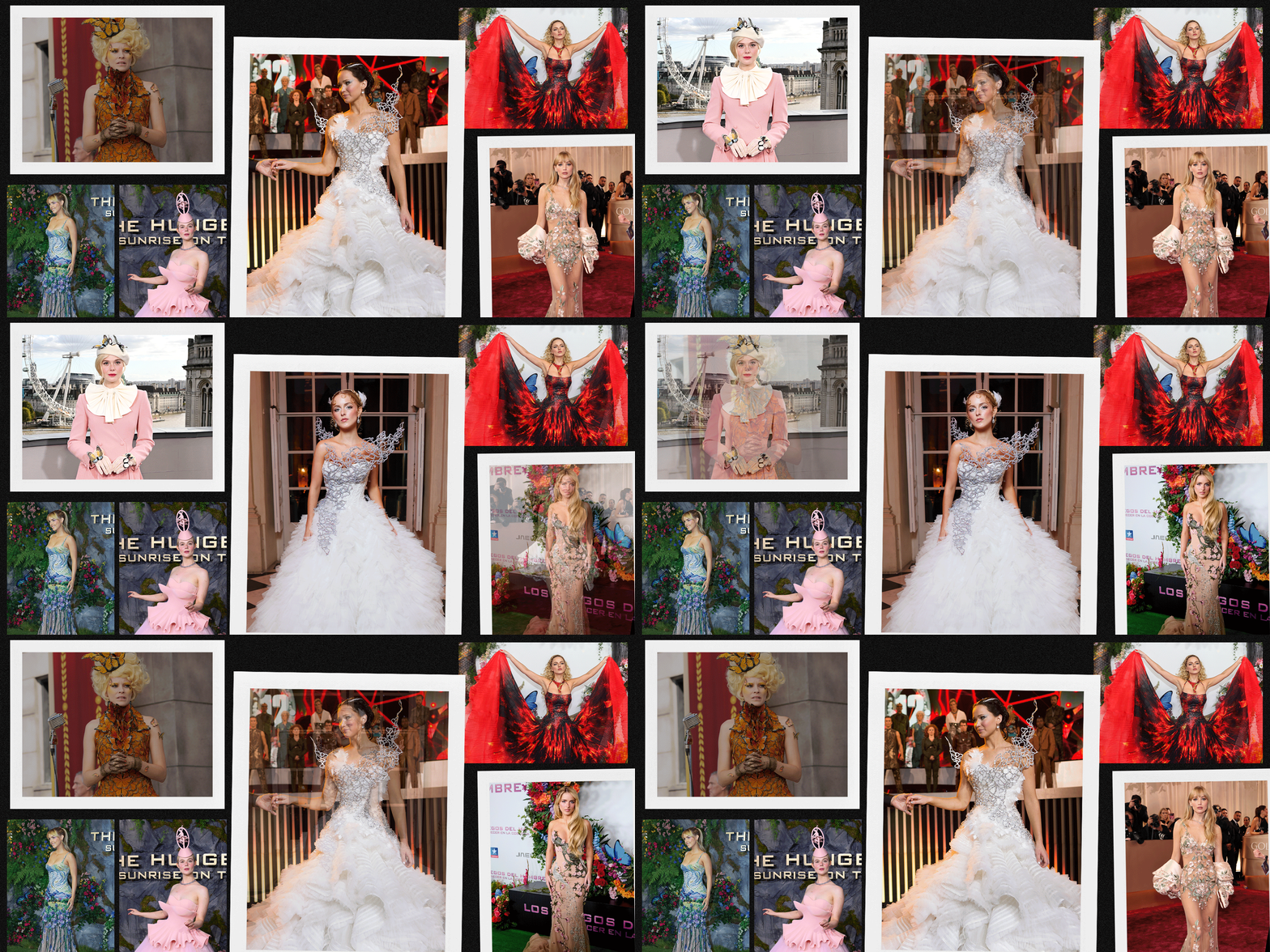
The press tour for The Hunger Games: Sunrise on the Reaping has arrived with a wardrobe strategy so deliberately on-the-nose that it has reframed what red carpet dressing can actually say – not about a star’s taste, but about the film itself.
Method Dressing Grows Up
Method dressing – the practice of wearing looks that mirror a film’s themes, characters, or visual world during its promotional circuit – has been building momentum for years. What started as a clever stylist trick, pulling archive pieces or commissioning looks that nodded obliquely to a character’s wardrobe, has gradually sharpened into something far more deliberate. The Sunrise on the Reaping cast appears to have taken the concept to its furthest point yet: dressing not just in conversation with the film, but in direct, sometimes uncomfortable alignment with its politics.
The Hunger Games franchise is built on a stark visual grammar – the decadence of the Capitol set against the poverty of the districts, opulence weaponized as control. That tension is not subtle source material. And yet the press tour looks have leaned directly into it, with cast members appearing in exaggerated silhouettes, maximalist styling, and theatrical references that recall the Capitol’s grotesque pageantry rather than deflecting from it.
This is a meaningful choice. Press tours have historically been about access and approachability – a star softened slightly from their screen persona, made palatable for morning television and magazine profiles. When the wardrobe instead amplifies the film’s darker themes rather than sanding them down, it marks a shift in what promotional fashion is being asked to do.
The question the Sunrise on the Reaping tour raises is not whether method dressing works aesthetically – by most accounts, the looks have landed – but whether it represents a ceiling. If the goal is to dress as the film’s argument, what room is left beyond this? The franchise’s own iconography essentially demands Capitol excess, and the cast has delivered it. That alignment is so complete it almost closes the loop on the technique itself.
The Red Carpet as a Secondary Screen
Red carpets have long functioned as extensions of a film’s marketing apparatus, but the relationship used to be more passive. A star wore something beautiful, photographers shot it, and coverage generated column inches that kept the film’s title in circulation. The look was incidental to the message. What the Hunger Games press tour has done – and what a handful of other high-concept promotional campaigns have gestured toward in recent seasons – is make the wardrobe load-bearing. The clothes are not beside the point. They are the point.
This carries real risk. Method dressing at this level requires a film with a legible visual world, a cast willing to subordinate personal style to concept, and stylists who understand the source material well enough to translate it without tipping into costume. The Hunger Games satisfies the first condition almost automatically – Suzanne Collins’s world-building is specific enough that Capitol fashion has a recognizable texture even for audiences who have not read the books. But the second and third conditions are harder to guarantee, and when they fail, the result is a press tour that reads as confused rather than considered.
Hollywood has been pushing the boundaries of what event dressing can communicate, and the Sunrise on the Reaping campaign lands within that broader momentum. But a gala or awards circuit allows for individual interpretation – each attendee brings their own read to the dress code. A press tour is more controlled, more singular in its message. When the whole cast is pulling in the same conceptual direction, the effect is closer to a collective performance than a series of individual fashion moments.
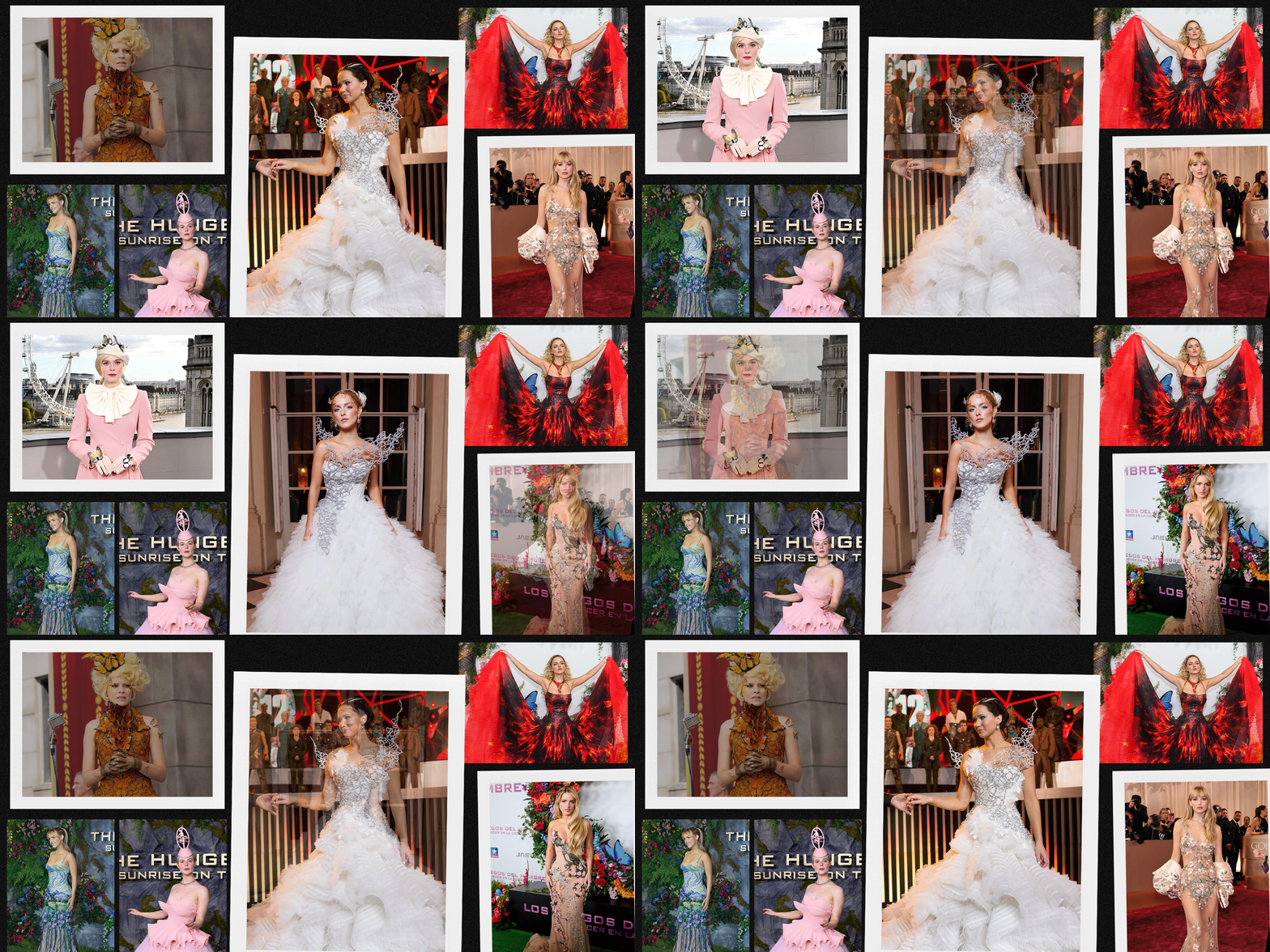
That collective quality is part of what makes this tour feel different. It is not one actor making a bold choice while their co-stars play it safe. The commitment appears to run through the ensemble, which raises the pressure on each individual look and also raises the payoff when it works. A single Capitol-coded outfit is a statement. Five of them, worn across consecutive stops on an international press circuit, start to feel like an argument.
What that argument is, exactly, is worth sitting with. The Hunger Games as a franchise has always asked its audience to notice when spectacle is being used as distraction – when beauty and excess are deployed to prevent people from looking too closely at what is actually happening. The press tour, in dressing so explicitly in Capitol aesthetics, is either critiquing that mechanism or participating in it. Possibly both. The ambiguity is not a weakness in the strategy. It is, arguably, the whole point.
The Stylist’s New Brief
What this moment clarifies is that the stylist’s role in a major press tour has changed substantially. The brief used to center on making a star look good, full stop – flattering silhouette, appropriate formality, nothing that would pull focus from the interview itself. Now the brief increasingly includes narrative coherence, thematic literacy, and an understanding of how individual looks will read as a sequence across weeks of coverage. That is a different set of skills, and it is producing a different kind of output.

The Sunrise on the Reaping press tour will be studied for how far it pushed the concept of dressing-as-commentary – and whether that push left anywhere further to go. If the Capitol’s maximalism is both the film’s villain aesthetic and the press tour’s visual language, then the cast has dressed in a way that refuses to let audiences sit comfortably between the two. Is that the final frontier of method dressing, or simply its most visible peak so far?