




A Marriage Marked by Haute Couture and a Long-Standing Design Relationship
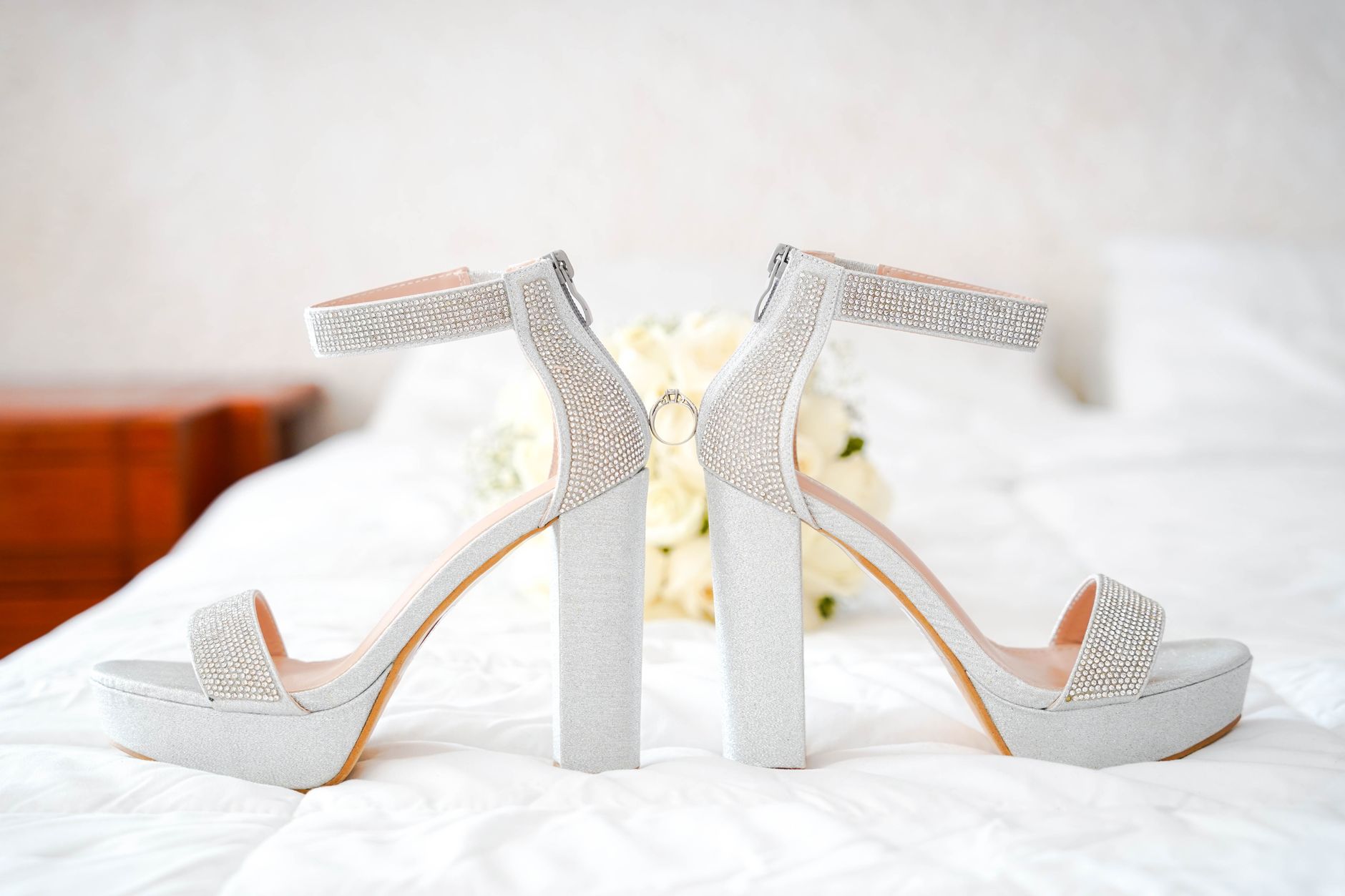
Taylor Swift married Travis Kelce wearing custom Christian Louboutin shoes paired with Dior haute couture – a bridal look that brought together two of fashion’s most storied houses for one of the most photographed ceremonies in recent memory.
The Louboutin Connection Runs Deeper Than a Single Pair of Shoes
The choice of Christian Louboutin for Swift’s wedding footwear was not a cold outreach or a one-off commission. The relationship between the pop star and the Paris-based footwear house was already well-established before she ever walked down the aisle. Christian Louboutin created hundreds of shoes for Swift’s “Eras Tour” – a production that spanned multiple continents, dozens of costume changes, and years of planning. That scale of collaboration meant Louboutin’s ateliers were already intimately familiar with the demands of Swift’s performances: heel heights that could withstand hours of choreography, materials that read under stadium lighting, constructions built for repetition and endurance.
When a brand produces hundreds of pairs for a single artist’s tour, the working relationship shifts from vendor to something closer to creative partner. Fittings become detailed, preferences become documented, and the designer’s team develops a precise understanding of what the client wants before she asks for it. That kind of institutional knowledge is exactly what informs a custom bridal commission – where there is no margin for error and no opportunity for a second fitting on the day itself.
The custom nature of the wedding shoes sets them apart from the Eras Tour designs in a significant way. Tour footwear is engineered for performance. Bridal footwear, especially at this level, is engineered for image – for the specific photographs, the specific light, the specific silhouette that a gown creates. Louboutin, whose red-lacquered soles have appeared at weddings from Monaco to Manhattan, has a long history of producing one-of-a-kind pieces for high-profile ceremonies. Swift’s shoes follow that lineage directly.
The pairing with Dior haute couture placed the look firmly in the territory of formal European fashion. Dior’s haute couture atelier operates on its own timeline – pieces require dozens of hours of hand labor, multiple fittings, and coordination between embroiderers, seamstresses, and petite mains that most fashion consumers never interact with. Aligning footwear with a Dior haute couture gown requires more than visual compatibility; it requires the shoes to hold their presence against construction and fabric work of considerable complexity.
What the Bridal Choice Signals About Both Brands
For Christian Louboutin, the bridal moment functions as a different kind of visibility than the Eras Tour provided. Tour shoes exist in motion – filmed, streamed, photographed mid-performance at distances that blur detail. Wedding shoes exist in stillness. They appear in portraits. They are styled deliberately, examined closely, and discussed for months afterward in fashion and bridal media. The two formats offer completely different forms of exposure, and Swift’s wedding delivers both to the same brand within the same cultural cycle.
The Dior haute couture element is worth considering separately. Haute couture is a legally protected designation in France, governed by the Chambre Syndicale de la Haute Couture, and only a small number of houses qualify. Dior is among them. A bride choosing Dior haute couture is not simply buying a gown – she is commissioning a garment, a distinction that carries specific implications for how the look is credited, discussed, and archived in fashion history.
Swift’s wedding look arrives at a moment when bridal fashion is receiving elevated attention across the industry. Designers at multiple price points have expanded their bridal offerings in recent years, and the cultural weight attached to celebrity weddings continues to drive consumer interest in the category. When a figure with Swift’s reach chooses specific houses, those choices circulate across social media, bridal editorial, and retail trend reporting in ways that affect what shoppers request and what buyers stock.
Custom commissions, by definition, are not available for purchase. No consumer can buy Taylor Swift’s wedding shoes. But the association between Louboutin and a wedding of this visibility reinforces the brand’s positioning at the top of the formal footwear market – a position the house has held across decades of red carpet appearances and high-profile events. The custom work demonstrates capability, taste, and access, all of which feed the broader brand narrative even when the specific product remains out of reach.
There is also a continuity argument here. Swift did not switch designers for her wedding after the Eras Tour collaboration. She stayed with Louboutin. That loyalty – if it can be called that – carries a message of its own. In an industry where celebrities routinely shift between houses based on gifting agreements, campaign deals, and seasonal relationships, a bride choosing the same footwear house for her wedding that outfitted her for years of touring suggests something more durable than a transactional arrangement.
Hundreds of Pairs, Then One
The arithmetic of the Eras Tour collaboration and the wedding commission tells its own story. Hundreds of shoes were made for a concert production seen by millions of people across thousands of seats each night. Then, for the wedding, the number collapsed to a single custom pair – worn once, by one person, in one room. The contrast between those two scales is where the real weight of the commission lives.
Whether Swift’s gown will be publicly documented in full detail remains an open question – celebrity weddings vary widely in how much visual access is granted to media and the public. What is confirmed is the Dior haute couture gown and the custom Christian Louboutin shoes, two facts that position this as one of the more formally considered bridal looks in recent celebrity fashion history. The shoes are done. The photographs exist somewhere. The question now is what, exactly, they show.