



A New Name in Ratajkowski’s Orbit
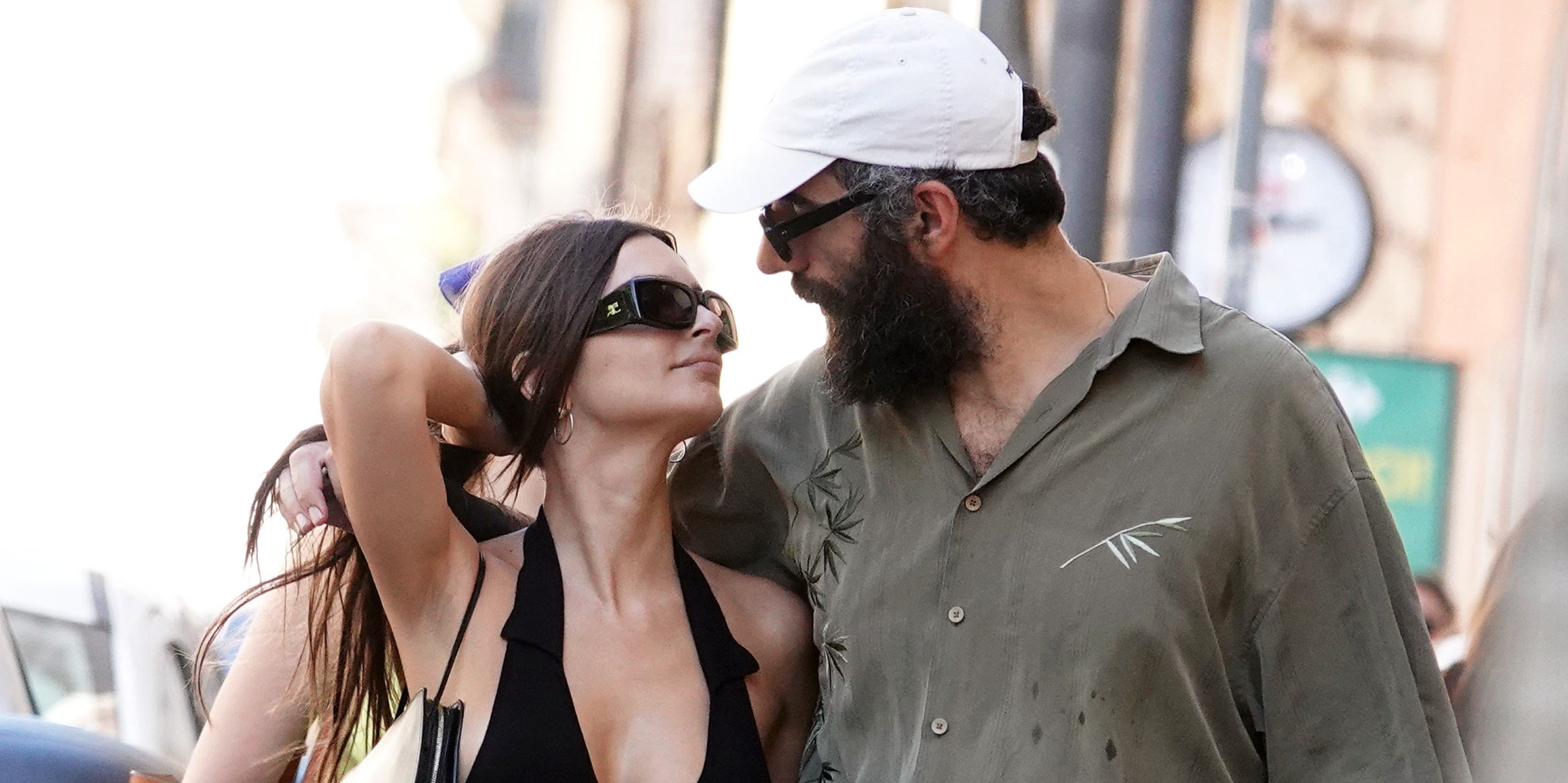
Emily Ratajkowski has been linked to French filmmaker Romain Gavras, a name that carries significant weight in European cinema and music video direction. The pairing has drawn attention not just for the celebrity factor, but because Gavras operates in creative circles that overlap with fashion, music, and film in ways that feel genuinely connected to Ratajkowski’s own world.
Ratajkowski, who has built a presence that spans modeling, acting, writing, and outspoken public commentary, tends to attract partners who move in similarly high-profile lanes. Gavras fits that pattern – and then some.
Who Romain Gavras Actually Is
Romain Gavras is a French director whose work sits at the intersection of fashion imagery, music video aesthetics, and narrative filmmaking. He is the son of celebrated Greek-French filmmaker Costa-Gavras, director of the 1969 political thriller Z, which won the Academy Award for Best Foreign Language Film. That lineage places Romain inside one of European cinema’s more storied family trees.
Before his name surfaced alongside Ratajkowski’s, Gavras was linked to Dua Lipa, the British-Albanian pop star who has become one of the most photographed women in entertainment. That relationship kept Gavras in tabloid circulation well beyond his directorial credits, introducing him to audiences who follow celebrity culture more closely than film festival schedules.
His directing career, however, is the more substantial part of his biography. Gavras has helmed music videos that generated genuine cultural conversation – his work tends toward the visceral and visually dense, favoring wide shots, crowd choreography, and a certain rawness that distinguishes him from directors who lean on sleek minimalism. He directed the video for Jay-Z and Kanye West’s “No Church in the Wild,” a clip that cemented his reputation for handling large-scale, confrontational imagery with control.
Beyond music videos, Gavras directed Our Day Will Come (Notre jour viendra), a 2010 French film starring Vincent Cassel. The film screened at the Tribeca Film Festival and signaled that Gavras was building a body of work that extended beyond the three-to-four-minute format. His feature Athena, released on Netflix in 2022, pushed further into long-take action filmmaking and received significant critical attention for its technical ambition – specifically an opening sequence filmed to appear as a single unbroken shot running roughly ten minutes.
Where Fashion and Film Overlap for Both of Them
Ratajkowski’s world and Gavras’s world share more infrastructure than a casual observer might assume. High-end fashion brands regularly commission directors with cinematic credibility for campaign films, and Gavras’s visual style – aggressive, textured, kinetic – maps onto the aesthetic appetite of luxury labels looking to distinguish their content from standard advertisement formats.
Ratajkowski herself has been a fixture in fashion campaigns, magazine covers, and brand partnerships throughout her career, having appeared in work for major labels and publications globally. Her 2022 essay collection My Body complicated and deepened her public image, framing her relationship with the modeling industry and visual culture in explicitly critical terms. A relationship with a director who approaches image-making with clear artistic intention rather than commercial reflex fits the version of herself she has worked to articulate publicly.
What This Pairing Signals in a Broader Context
Celebrity relationships in the fashion and entertainment space increasingly function as a form of brand adjacency – who someone dates communicates something about their positioning, whether intentional or not. Ratajkowski pairing with a director of Gavras’s profile lands differently than a pairing with, say, a tech founder or a professional athlete. It keeps her squarely inside the creative-class image she has been constructing since stepping away from the more straightforward model-celebrity lane.
Gavras, for his part, gains little from tabloid visibility that his work doesn’t already provide him. Athena earned him industry attention independent of his personal life, and his lineage within French cinema gives him a kind of credibility that doesn’t depend on who he’s photographed with at a restaurant in New York or a party in Paris.
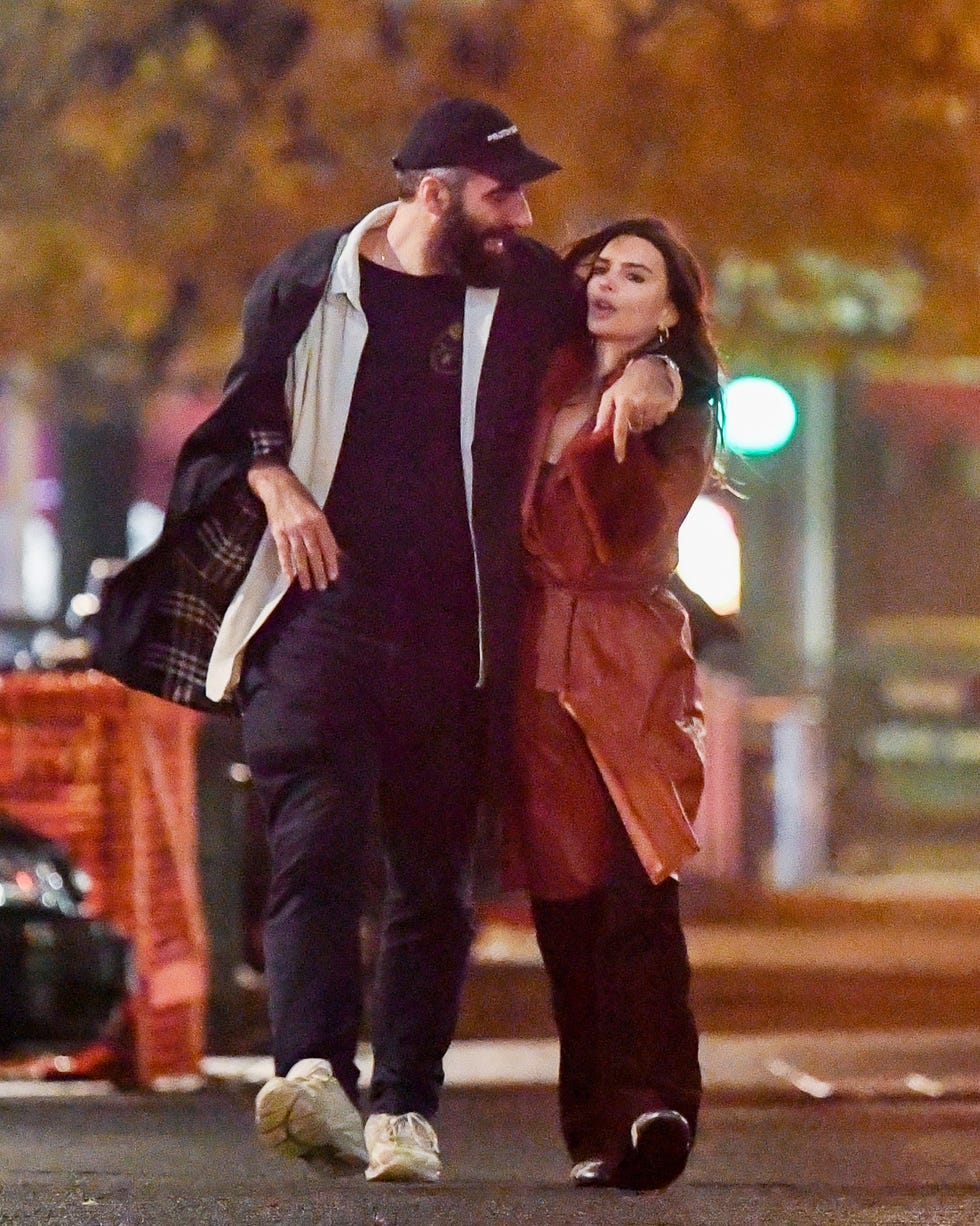
Still, the visibility that comes from being linked to someone of Ratajkowski’s profile is not nothing. In an entertainment landscape where streaming platforms are constantly searching for directors who can deliver visual spectacle with cultural cachet, having your name in general-interest publications – even in the celebrity gossip context – keeps you legible to audiences and executives who might not follow Cahiers du Cinema.
Ratajkowski’s dating history has been publicly documented with unusual intensity since her 2022 separation from producer Sebastian Bear-McClard, and each subsequent link has generated its own media cycle. The question worth asking isn’t whether Gavras is famous enough to date Ratajkowski – it’s whether the image they project together is coherent. A model-turned-author-turned-cultural-commentator alongside a filmmaker wrestling with legacy, spectacle, and scale? That particular tension hasn’t been resolved by anything either of them has said publicly.