



The Woman Shaping Every Strand on Westeros’s Most Dangerous Women
On a prestige fantasy series where dragons and political betrayal compete for screen time, hair doesn’t usually make the shortlist of things audiences consciously notice. But Rosalia Culora, the hair designer behind HBO’s House of the Dragon, is counting on that invisibility – at least partially. Her work for Season 3 is built on the idea that a character’s coiffure should function as a second skin, something that communicates power, grief, or desperation before a single line of dialogue lands.
Culora spoke with Allure about the craft behind the show’s increasingly intricate hair work, including the evolution of Rhaenyra’s silhouette across seasons, the structural complexity of the braiding, and the very specific challenge of removing fake blood from platinum blonde wigs.
That last detail alone says everything about this job.
Hair as a Political Statement, Not a Style Choice
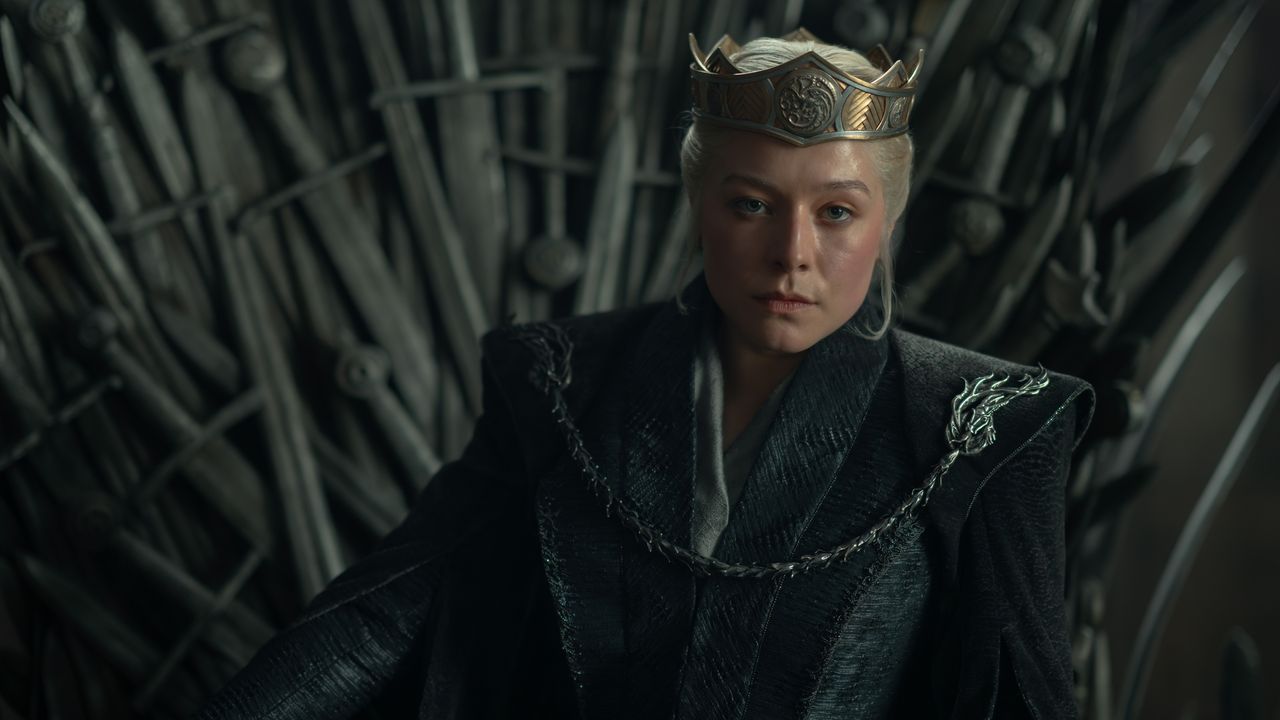
The word Culora returns to when describing her approach is “armor.” It’s not a metaphor she uses loosely. In a show where every Targaryen and Velaryon is engaged in some form of psychological warfare, the physical presentation of these women – their braids, their updos, their loose and deliberately undone moments – is being read by every other character in the room. Culora designs for that gaze. A tightly constructed braid isn’t just a technical achievement; it signals that a character has prepared herself, that she is defended, that she is not walking into the next scene unaware of what it might cost her.
This means the hair department is working from the same dramatic logic as the writers’ room. When a character’s hair begins to unravel on screen – literally – Culora’s team has likely mapped that deterioration to a specific story beat. The undoing is intentional. Loose strands, asymmetry, the appearance of neglect: these are all directorial choices embedded in what looks like a simple styling decision. That level of coordination between departments is what separates prestige television hair work from conventional on-set grooming.
The braiding itself is technically demanding in ways that don’t read as showy on camera. Culora described the construction as intricate – layered structures that have to hold across long shooting days, under costume weight, and through action sequences that are considerably less gentle than a sit-down scene. Each style is also period-specific in its inspiration, drawing from a visual language that signals Westerosi aristocracy while remaining legible to a contemporary audience that has never lived in a world where dragons are a military asset.
Rhaenyra’s Hair Has Been Telling Her Story All Along
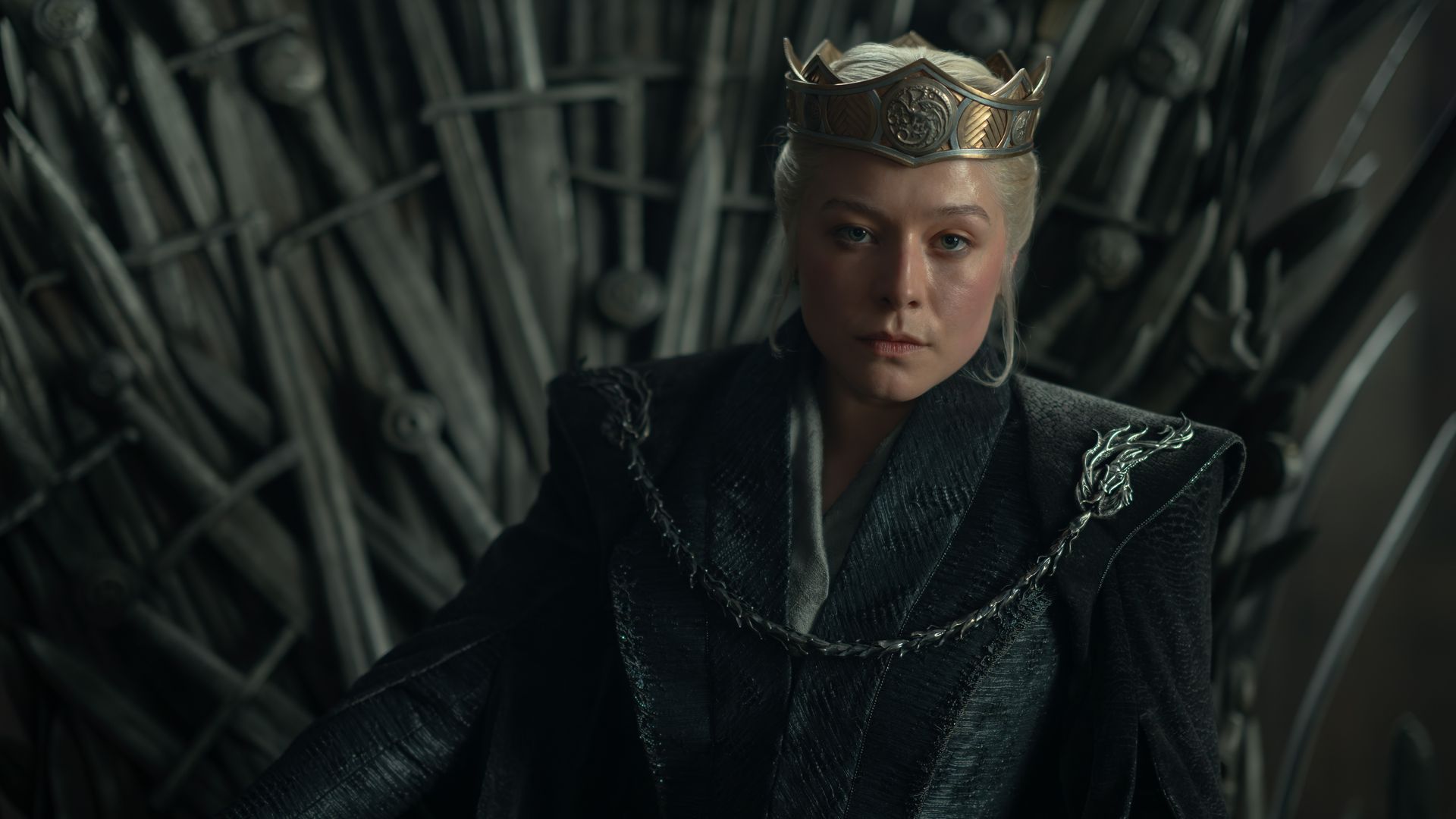
Of the characters Culora discusses, Rhaenyra’s hair arc across the series carries the most accumulated weight. The evolution isn’t cosmetic. From season to season, the way her hair is dressed reflects where she sits in relation to power – whether she is claiming it, defending it, mourning it, or temporarily stripped of it. In Season 3, that progression continues, and Culora describes it in terms of character psychology rather than aesthetic choice. The hair tells you where Rhaenyra’s head is before the writing does.
That kind of long-form character tracking through a physical detail is genuinely rare. Most continuity in television hair is about matching shots, keeping things consistent across filming days, avoiding the kind of visual discontinuity that pulls an audience out of a scene. Culora is doing that, and something more: she is building a visual biography. Each new season’s silhouette inherits something from the last, and the differences between them are legible if you’re watching closely enough to notice.
It also means that when the hair is deliberately wrong – damaged, disheveled, stripped of its usual architectural precision – that choice carries the full weight of everything that came before it. Rhaenyra with perfect hair is a political figure. Rhaenyra without it is something rawer. Culora has designed that contrast to land hard.
The Practical Nightmare Nobody Talks About
Then there is the blood. House of the Dragon is not a show that flinches from violence, and the hair department absorbs the consequences of that in ways that never appear in credits or production notes. Getting fake blood out of platinum blonde wigs is, by any reasonable measure, a conservation problem. The pigment used in stage blood – typically a red dye suspended in a thickening agent – has a specific affinity for porous, light-colored fibers. Platinum wigs, which are already chemically processed to achieve their near-white color, are particularly vulnerable to staining and structural degradation.
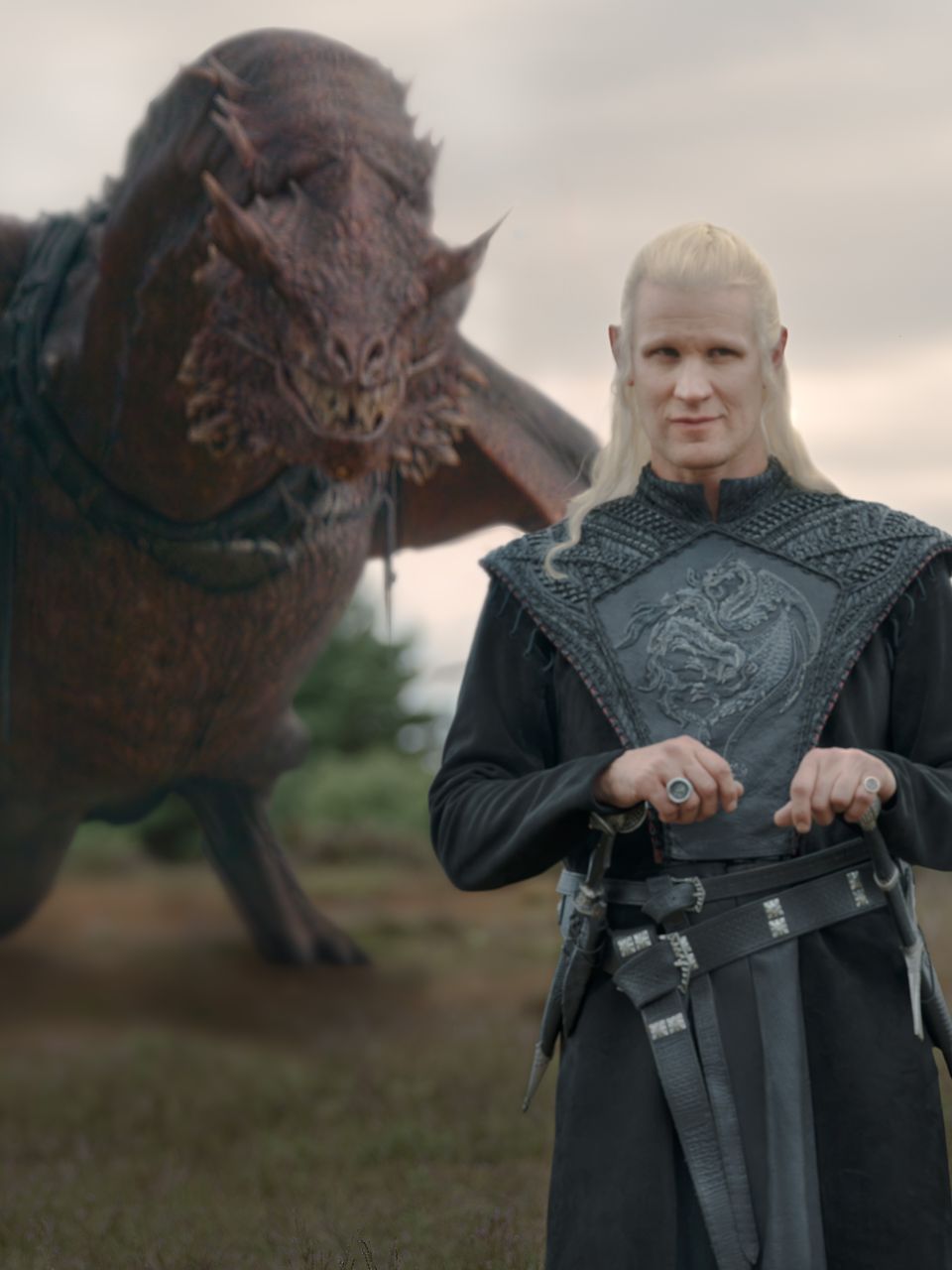
Culora’s team has developed methods for managing this, though she did not detail the exact products or protocols in her conversation with Allure. What the detail reveals, though, is the volume of invisible labor that goes into maintaining the visual continuity audiences take for granted. A wig that appears in one scene, gets soaked in fake blood, and must return to screen in a subsequent scene looking pristine has traveled through a process most viewers will never think about. The hair designer’s job, in that sense, is to make a laborious restoration look like nothing happened at all.
The physical demands of the department extend beyond blood removal. Wigs of this quality – and at this budget level, on a flagship HBO production – require daily maintenance, careful storage, and constant monitoring for wear. A wig that begins to look tired or slightly off-register from its established look will register subconsciously with audiences even if they can’t name what’s wrong. Culora is managing that threshold across an entire cast, an entire season, in a production environment that generates new continuity challenges every day.
Why This Season Feels Different
Season 3 appears to be raising the stakes on the hair work in the same way it’s raising them on everything else. Culora’s comments to Allure suggest a department that is more confident in its visual language, more willing to use hair as an expressive instrument rather than a maintenance task. The braids are more intricate. The character arcs are longer. The armor metaphor is not decorative – it is structural to how the show is being made.
Whether audiences are consciously aware of any of this is, ultimately, beside the point. The work functions whether or not it’s seen. And if a platinum blonde wig arrives on set looking immaculate after everything it’s been through, Rosalia Culora has already done the part of her job that no one will ever applaud.