



Self-Invention as Style
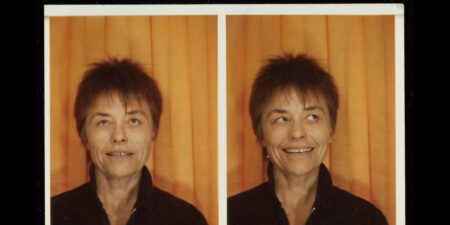
Jamaica Kincaid did not wait for permission to become herself – and she wants that point made clearly, starting with her eyebrows.
The Essay as a Mirror
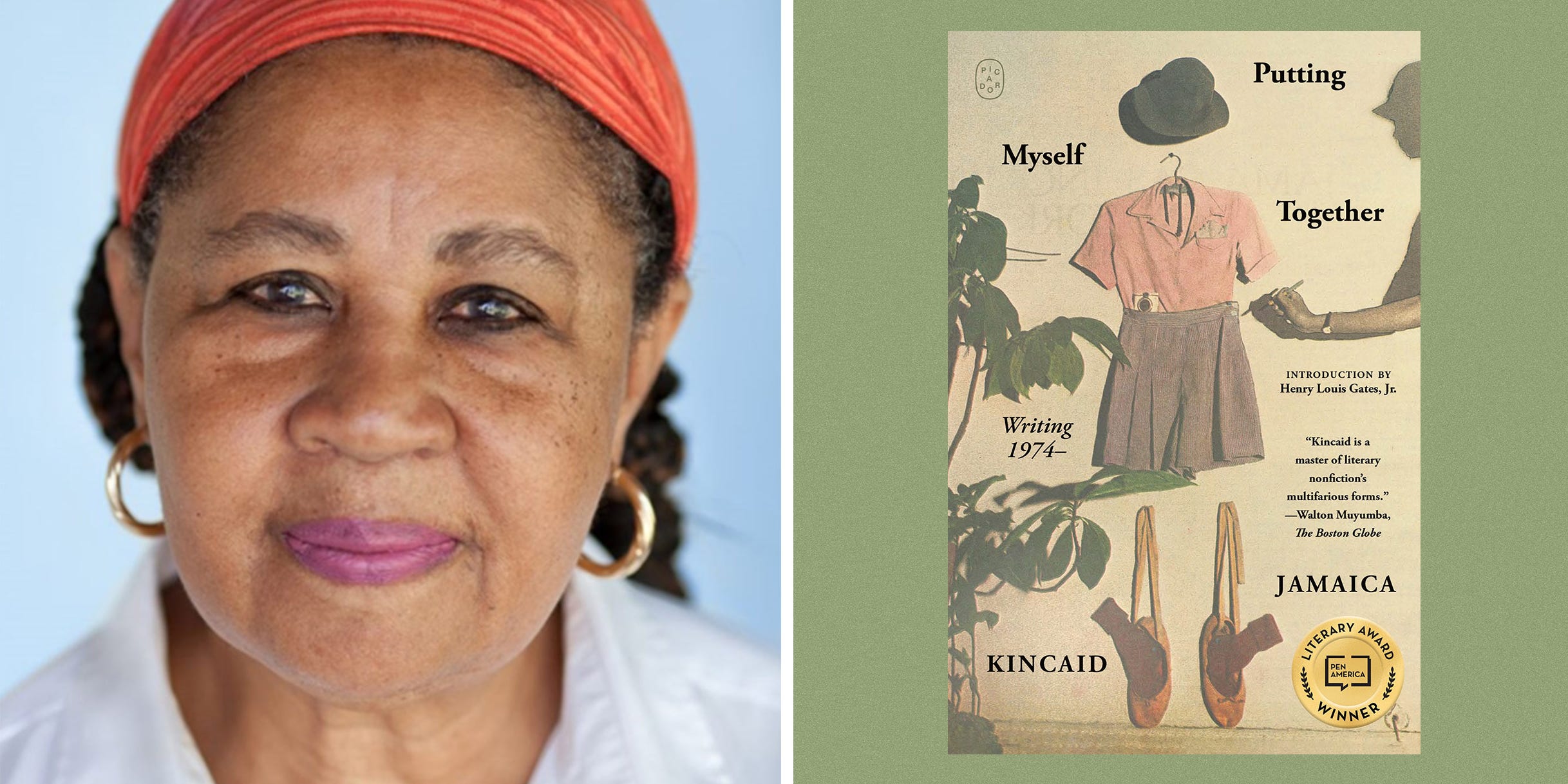
The paperback edition of Putting Myself Together, a collection of Kincaid’s essays, arrives with a backstory that is less about publication schedules and more about what it means to construct an identity from scratch. Kincaid – novelist, essayist, gardening obsessive, and one of the most distinctive voices to emerge from the Caribbean literary tradition – has spent decades writing about how a person assembles herself in the face of cultural erasure, colonial inheritance, and the sheer noise of other people’s expectations. The essays in this collection bring that project into sharp relief.
What separates Kincaid’s self-invention from the kind that fills Instagram captions is the specificity of the acts involved. The shaved eyebrows are not a metaphor. They were a real, physical decision – the kind that alters how the world reads your face before you say a word. In fashion, that kind of move is understood immediately: the body as the first draft of a statement. Kincaid made that edit herself, early, and without a stylist in sight.
The collection sits at the intersection of autobiography and cultural criticism, which is where Kincaid has always done her most interesting work. Her earlier novels – Annie John, Lucy, The Autobiography of My Mother – circled the same territory: a young woman leaving behind what was assigned to her and building something new from whatever materials she could find. The essays in Putting Myself Together make the mechanics of that process more visible, less novelistic, more direct.
There is a reason this collection lands in the fashion conversation without feeling forced. The question of self-presentation – what you choose to wear, how you alter your face, what signals you send before anyone hears your name – is the same question Kincaid has been asking about identity for her entire career. The shaved eyebrows are just the version of that question that happens to be written on skin.
Inventing the Artist Before the Work
Kincaid was born Elaine Potter Richardson in Antigua in 1949. She changed her name to Jamaica Kincaid when she began writing, partly to protect herself from family disapproval and partly because a pen name gave her a kind of freedom – a second identity she could inhabit fully on the page. That act of renaming was not incidental. It was the first serious edit she made to herself as an artist, and it preceded the work itself. The name had to exist before the writing could.
She moved to New York as a teenager, worked as an au pair, and eventually found her way to The New Yorker, where she became a staff writer in 1976 – a position she held for nearly two decades. Her column, “Talk of the Town,” gave her a platform, but the more defining move was what she did with fiction and essays once she had the confidence to go further. She wrote about Antigua’s colonial history with a directness that made some readers uncomfortable. She wrote about her mother with a ferocity that resisted easy categorization as love or resentment. She wrote about gardening – her long-running passion – with the same intellectual intensity she brought to postcolonial critique. None of these were separate projects. They were all part of building the same person.
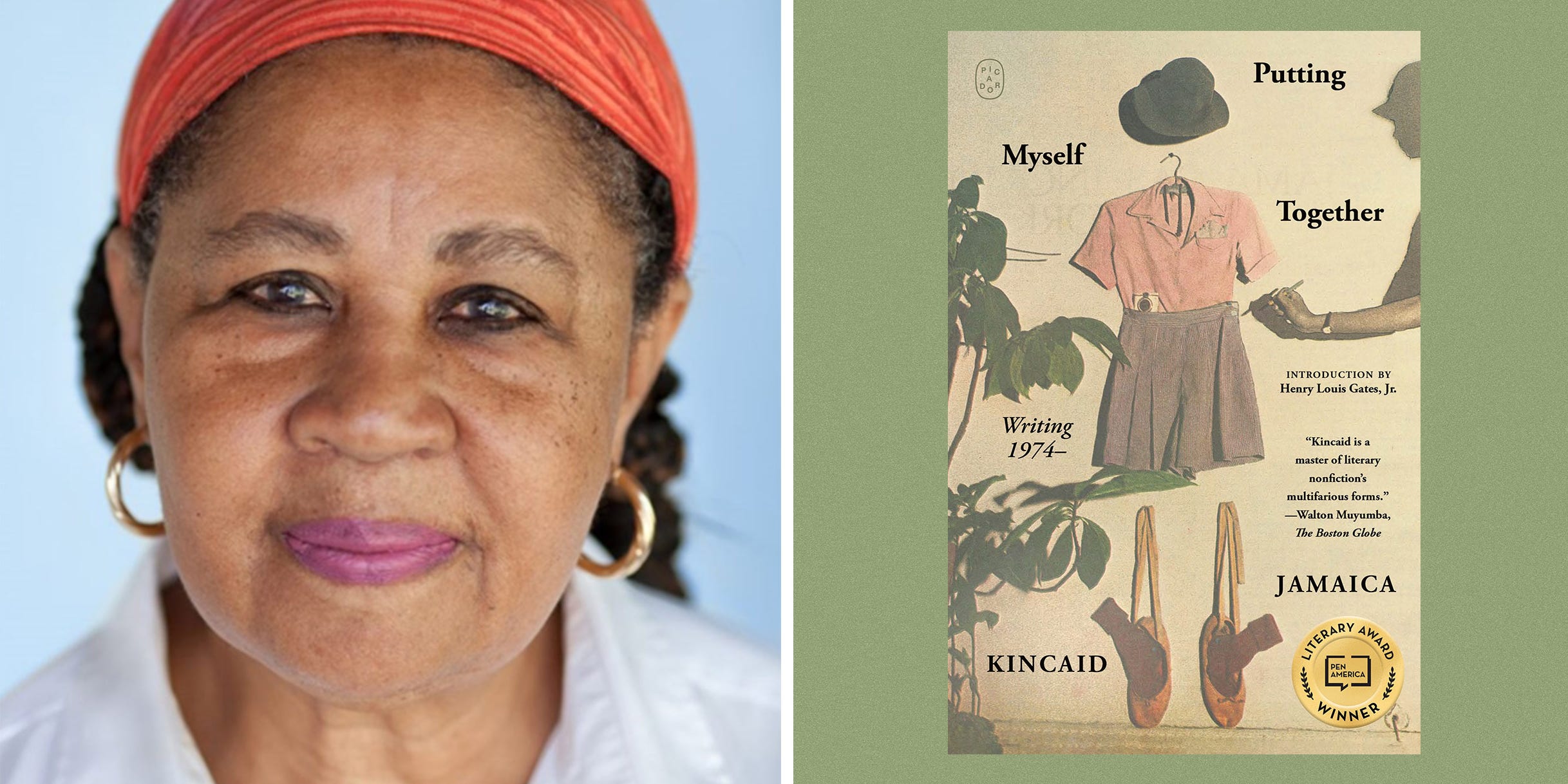
The act of assembling a self from disparate, sometimes contradictory materials is something that fashion understands structurally. A look that combines borrowed heritage with personal disruption – a grandmother’s silhouette cut with something borrowed from another culture, worn with an expression that refuses to explain itself – is doing exactly what Kincaid describes in her essays. The artist does not arrive fully formed. She accumulates. She edits. She sometimes shaves her eyebrows and sees what the world does with that information.
In interviews, Kincaid has spoken about the deliberate nature of her self-construction with a directness that can read as arrogance to people who expect women, especially Caribbean women, to be more apologetic about their ambitions. She is not. The essays in Putting Myself Together are not confessional in the way that term usually implies – soft, vulnerable, seeking absolution. They are more like design documents. Here is what I chose. Here is why. Here is what it cost.
That posture matters for how the book lands in 2025. At a moment when the language of self-expression has been almost entirely absorbed into marketing – when “authenticity” is a brand strategy and “identity” is a content category – Kincaid’s version of the thing feels genuinely abrasive. She is not building a brand. She is describing a person, and the person is difficult, funny, angry, and precise in ways that resist flattening. The shaved eyebrows are memorable precisely because they are not trying to be a lesson.
Her gardening writing, collected in part in My Garden (Book) and Among Flowers, offers another angle on the same obsession. She approaches plant life with the same questions she brings to cultural history – who named this, who owned the land it came from, what violence is embedded in the act of transplanting something from one soil to another. For Kincaid, the garden is never just a garden. It is another place where identity gets assembled and contested. The paperback release of Putting Myself Together places that ongoing argument back in front of a new readership.
What the Eyebrows Actually Mean
The detail about the eyebrows – that Kincaid shaved them before it was a recognized aesthetic choice, before it had cultural legibility as a statement – is the kind of fact that fashion historians would file under “ahead of her time,” which is a phrase that tends to flatten the actual decision into retrospective praise. The more accurate framing is that she made a choice that had no established meaning yet, which meant she was also making the meaning. That is a different kind of courage than following a trend early.
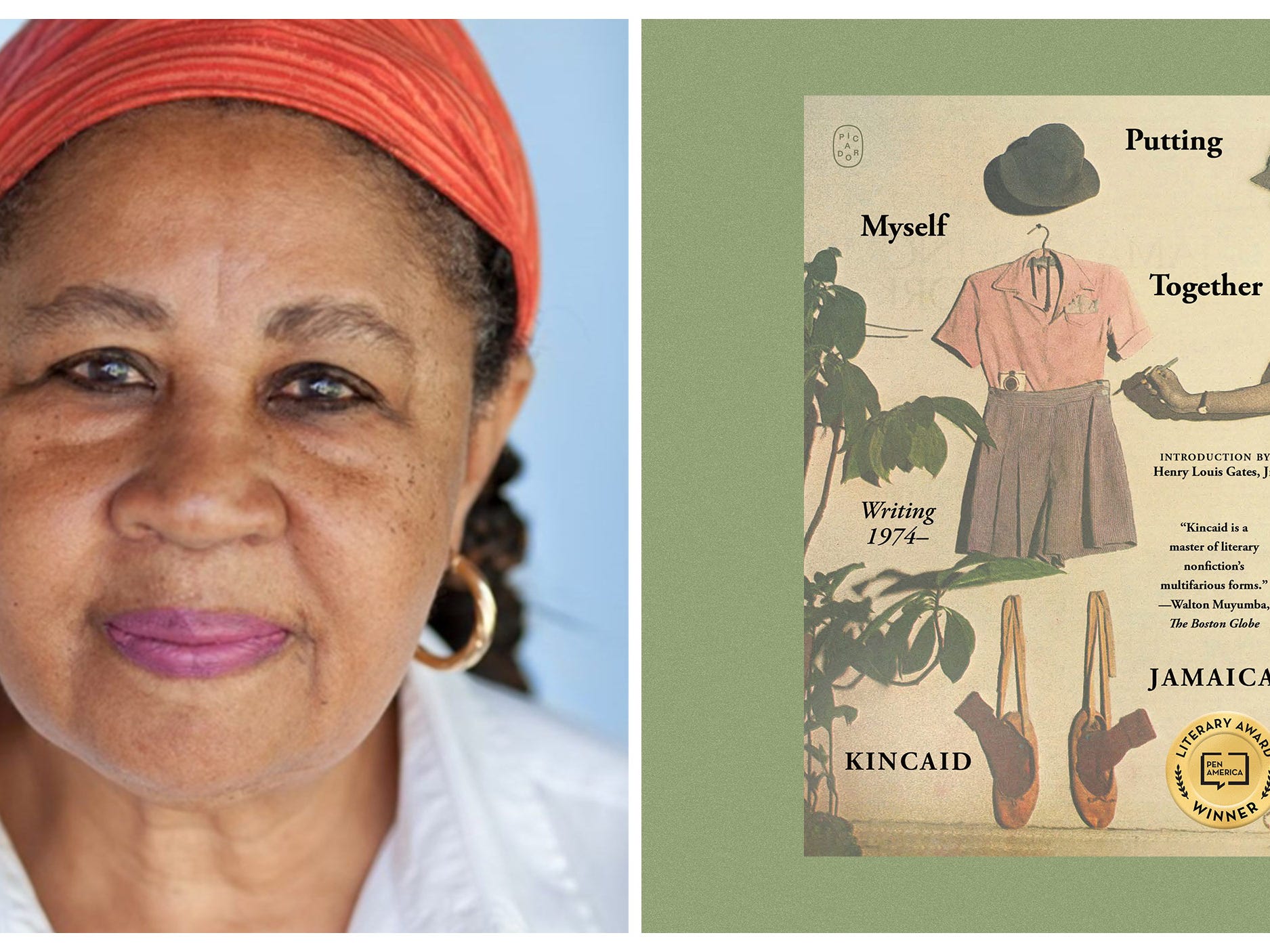
With Putting Myself Together now available in paperback, the essays are accessible to a wider audience – and the timing places them alongside conversations about authorship, appearance, and how women construct public selves that have not gotten quieter. Kincaid has been making the same argument for fifty years. The argument has not changed. The audience has simply grown large enough to catch up.
Which raises the obvious question: if a woman shaves her eyebrows in 1970-something, with no trend to validate it and no platform to explain it, and then spends five decades writing about what it means to build yourself from nothing – at what point does the culture stop calling that ahead of its time and start calling it the timeline?