







From Convention Floor to Dressing Room
The World Artificial Intelligence Conference 2026 – known as WAIC – made one thing clear: AI in China has moved past the prototype stage and landed directly inside fashion and beauty’s commercial machinery.


What WAIC 2026 Actually Showed the Industry
For years, AI demonstrations at major tech conferences felt like distant promises – systems that could theoretically design a garment or recommend a lipstick shade, but had no clear path to a store shelf or a consumer’s cart. WAIC 2026 shifted that framing entirely. The Shanghai-based conference, which draws participation from China’s largest technology companies alongside global players entering the Chinese market, staged exhibits and working demonstrations specifically oriented around consumer goods – with fashion and beauty occupying a significant share of the floor.
What distinguished this year’s showing was the emphasis on production-side integration rather than front-end novelty. Brands at the conference weren’t primarily showing AI-powered chatbots or virtual try-on filters, though those existed. The heavier investment was in supply chain modeling, material sourcing prediction, trend forecasting systems, and design generation tools that feed directly into manufacturing pipelines. These are backstage functions that consumers rarely see – but they determine what ends up on shelves, at what price, and in what volume.
China’s fashion and beauty sector is a logical home for this kind of industrial AI deployment. The country’s manufacturing infrastructure is deeply integrated, with short distances between design studios, fabric suppliers, factories, and export logistics. AI systems that can accelerate decisions inside that chain – predicting which colorways will move in a given quarter, flagging material bottlenecks before they delay production – offer compounding efficiency gains that a more fragmented supply chain would struggle to capture at the same speed.
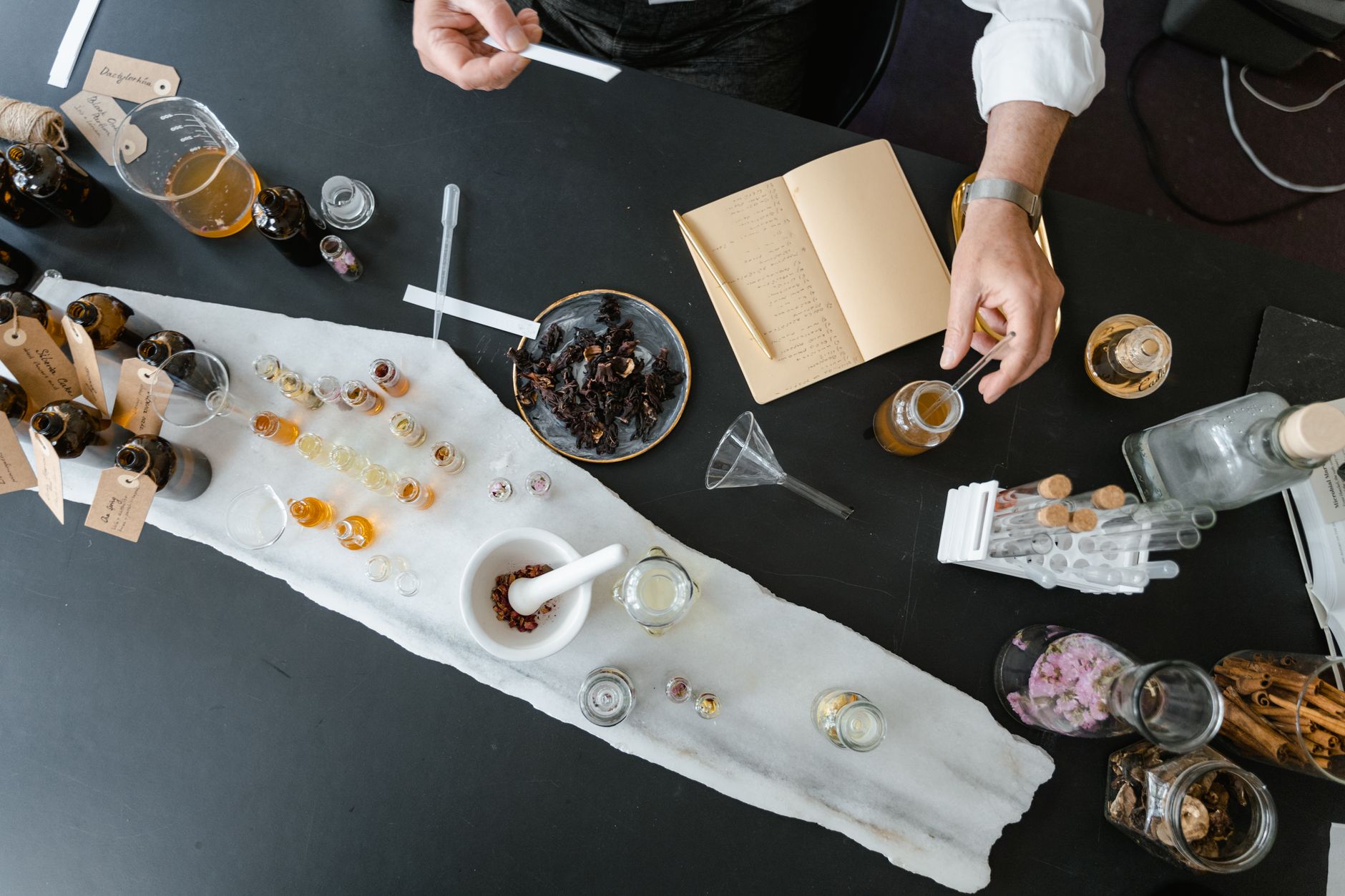
Beauty, in particular, emerged at WAIC 2026 as an industry where AI is advancing formula development and personalization at a scale that would have required far larger R&D teams five years ago. Skin analysis tools powered by computer vision, ingredient combination modeling, and consumer preference data drawn from China’s dense e-commerce ecosystem are converging into systems that can substantially shorten the time between a product concept and its first production run. For beauty brands operating in China’s fast-moving market – where trend cycles are shorter and consumer expectations for newness are high – that compression matters enormously.

Consumer Reality, Not Just Industry Infrastructure
The consumer-facing dimension of WAIC 2026 was equally pointed. China’s AI applications in fashion and beauty aren’t staying in the factory or the R&D lab – they’re being built into the shopping experience itself, and at a scale that reflects the country’s unusually high mobile commerce penetration. Platforms like Douyin and Tmall, which function simultaneously as social media and retail environments, are deploying AI recommendation and visual search at a level of granularity that Western platforms haven’t matched.
Virtual fitting and skin-matching technology shown at the conference has reached a visual fidelity that makes earlier versions look rough by comparison. AI systems can now map fabric drape across different body geometries with enough accuracy to meaningfully reduce return rates – a persistent cost problem for apparel e-commerce globally. For Chinese platforms processing tens of millions of daily transactions, even a modest reduction in returns translates to significant operational savings and a measurable drop in the environmental cost of reverse logistics.
Personalization in beauty has taken a similar trajectory. Rather than generic “recommended for you” prompts, AI-driven systems shown at WAIC 2026 deliver product suggestions calibrated to specific skin concerns, climate conditions, and usage behavior – data points that Chinese consumers increasingly provide willingly in exchange for more accurate recommendations. The density of this feedback loop, operating across platforms where consumers both discover and purchase, gives Chinese beauty AI a training data advantage that is difficult for markets with more fragmented retail structures to replicate quickly.
There’s also a generative design current running through what was exhibited. AI tools that can produce fashion design variations – colorways, silhouette modifications, print iterations – based on trend signals and inventory data are being adopted by fast-fashion producers and, increasingly, by mid-tier brands looking to compete on speed without proportional increases in design staff. This raises real questions about authorship and creative labor inside fashion, questions that WAIC 2026 surfaced but did not resolve.
One of the more direct signals from the conference was how explicitly Chinese AI companies are targeting the fashion and beauty sectors as priority verticals – not peripheral applications. Investment in domain-specific models trained on fashion imagery, textile data, and beauty formulation is intensifying, which means the gap between general-purpose AI tools and purpose-built industry systems is widening in China’s favor for these categories specifically.
The Pressure This Creates Internationally
Global fashion and beauty companies with China operations or China-facing supply chains are watching WAIC closely, not as spectators but as participants with competitive stakes. If AI-enabled speed and personalization become the standard expectation among Chinese consumers, brands that can’t match that infrastructure will feel it in market share before they feel it in any strategic planning document.
The conference also put a timestamp on the shift. This is not a five-year horizon. Brands that attended WAIC 2026 were looking at systems in commercial deployment – not in beta, not in pilot, but running at scale inside China’s fashion and beauty market right now. The question isn’t whether AI will redefine how product gets made and sold in this space. The question is which companies built their integration early enough to own the advantages, and which ones are still deciding whether it’s worth the investment.