





There is a very specific smell that cat owners know but rarely talk about – the warm, milky softness of a kitten’s fur. This fall, that sensation is officially becoming a fragrance category.

How a Rescue Kitten Named Lucy Started Something
The discovery was personal before it was editorial. A two-month-old grey tabby rescue named Lucy arrived in her new home at the start of summer, and the writer covering this trend – who adopted her in May – noticed something unexpected: she couldn’t stop nuzzling the cat’s coat. Not out of pure affection, but because the scent was genuinely arresting. Soft musk. A faint suggestion of sweet milk. Almost nothing, and yet somehow everything.
That experience has a biological logic behind it. Bonding hormones and serotonin play their part when humans interact with animals, but they don’t fully account for why a kitten smells the way it does. The scent itself – light, warm, skin-adjacent – sits at the intersection of comfort and cleanliness. It doesn’t smell like a candle or a fabric softener. It smells like something alive and close.
Now perfumers are chasing exactly that feeling. Kitten scents – a loose but coherent fragrance category built around soft musk, cereal milk, gentle sweetness, and skin-warmth – are arriving on shelves just as fall’s heavier gourmands and dark woods start competing for counter space. The timing is not accidental. After years of skin-scent minimalism and clean fragrance movements, there is an appetite for something cozy that doesn’t collapse into cliche.
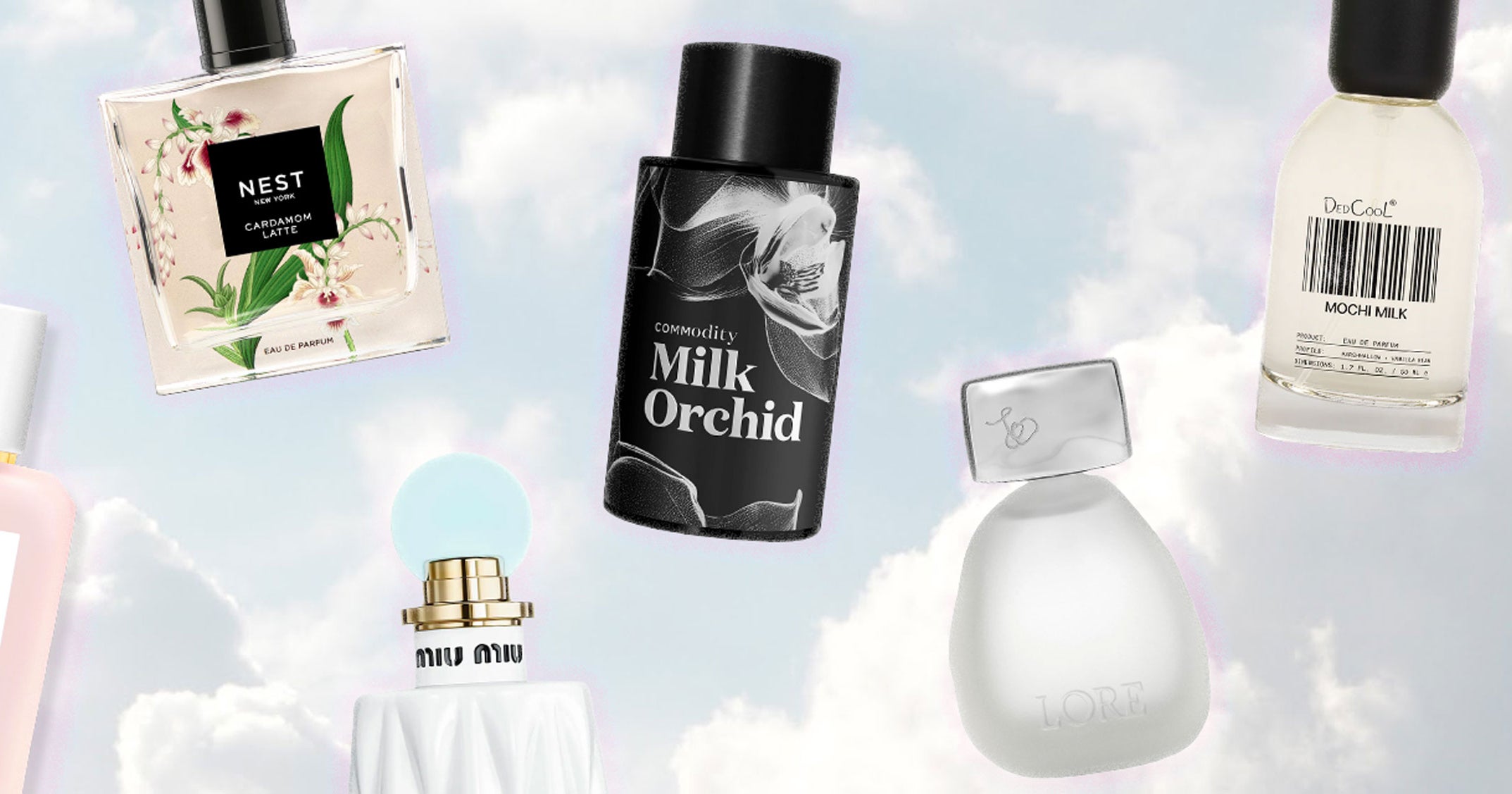
Seven fragrances have emerged as the clearest expressions of this direction, spanning major retailers and spanning from playful to genuinely sophisticated. Two in particular define the range of what “kitten scent” can mean in practice – one leaning milky and soft, the other warmer and spiced.
The Bottles Worth Knowing
Lore’s Lil Softie Eau de Parfum, available at Sephora, is the most direct translation of the concept. The name alone signals the intent. Its construction pairs spicy pink pepper with malty cereal milk, citrusy bergamot, and ambroxan – a synthetic molecule that mimics the warmth of human skin. On the skin, it reads as the milky, fruity sweetness that lingers at the bottom of a bowl of Fruity Pebbles, but with enough structure to avoid smelling like a children’s product. That combination – nostalgic base, grown-up finish – is exactly the tonal balance the category needs to work as a serious fragrance rather than a novelty.
NEST New York’s Cardamom Latte Eau de Parfum takes a spicier position within the same emotional territory. Cardamom anchors it, alongside jasmine, coconut milk, and vanilla cream. Where Lil Softie leans fruity and airy, Cardamom Latte runs warmer and denser – the difference between a kitten curled in a patch of sun versus one pressed against your side on a cold evening. Both are valid. Both are very much autumn.

What makes the kitten scent category distinct from standard gourmands is restraint. Gourmand fragrances built around vanilla, caramel, or chocolate tend toward richness that announces itself. Kitten scents, by contrast, stay close to the skin. They are meant to be discovered rather than projected – the kind of fragrance someone notices when they lean in, not when you walk past. That quietness is part of what makes them feel fresh on a market that has been saturated with statement perfumes for years.
The musk element is doing a lot of work across this trend. Ambroxan, white musks, and cereal milk notes create a base that reads as clean without smelling clinical. This distinguishes kitten scents from the clean fragrance wave that dominated the early 2020s, which often skewed cold and sterile. There is warmth here – biological warmth, the warmth of fur and breath and something small sleeping nearby. Perfumers have long known that the most emotional scents are the ones that mimic proximity to a living thing.
For anyone not already invested in fragrance, kitten scents are a low-friction entry point. They do not require knowledge of oud or chypre constructions. They do not demand an occasion. They smell like comfort at a specific, fine-tuned frequency, and that accessibility is probably why the trend is gaining traction beyond the perfume-enthusiast corners of the internet and into general lifestyle editorial.
What Fall Fragrance Actually Wants Right Now
Fall has reliable fragrance signatures – amber, leather, fig, tobacco – and they cycle back every year because they work. What kitten scents offer is not a replacement for those, but a different register entirely. Softness as a seasonal choice rather than a warm-weather default. The category sits closer to the “skin but better” philosophy than to any gourmand or aromatic tradition, and that makes it genuinely interesting to watch develop.

Lore’s Lil Softie and NEST New York’s Cardamom Latte are available now, with the full range of seven kitten-category fragrances surfacing at Sephora and through brand direct retail. All product pricing reflects availability at the time of original publication. The question hanging over the category is whether it can hold a distinct identity as more brands identify the trend and move toward it – or whether “kitten scent” becomes so broadly applied that the specificity that makes it work disappears entirely.